
About
Chibueze Peter Edeze
Researcher & Explorer
Research · Exploration · Community-led value
My work begins with people.
I am a researcher and explorer, interested in Indigenous and traditional knowledge, living heritage, craft, and the relationships between people and their environments.
I explore how people, places, objects, techniques, knowledge and materials come together in everyday life. My interest is in how these relationships can strengthen cultural continuity, local capabilities and community wellbeing.
I want to develop research and learning approaches that support community-defined value creation, responsible value governance and fair benefit sharing. The people who hold the heritage should decide what is possible, what is appropriate, and what must remain protected.
The purpose that guides my work
Create value.
Keep heritage whole.
Knowledge, materials, objects and places are held in relationships. Value must strengthen those relationships and the people who sustain them.
Value creation
Begin with the community’s own definition of value: wellbeing, cultural continuity, ecological care, skills and livelihoods. Support chosen opportunities without eroding meaning or turning heritage into a commodity.
Value governance
Communities set the rules for access, cultural use, research, publication and partnerships. Knowledge remains under the control of its custodians. They decide the boundaries and have the final say.
Fair benefit sharing
Agree fair terms before work starts. Recognise contributions, make costs and benefits transparent, and let communities determine how benefits support practitioners, future generations and collective wellbeing.
Textile photograph: Draceane (opens in a new tab) · CC BY-SA 4.0 (opens in a new tab)
Six connected areas of inquiry
What I explore
Living heritage in its own context, through the people who know it.
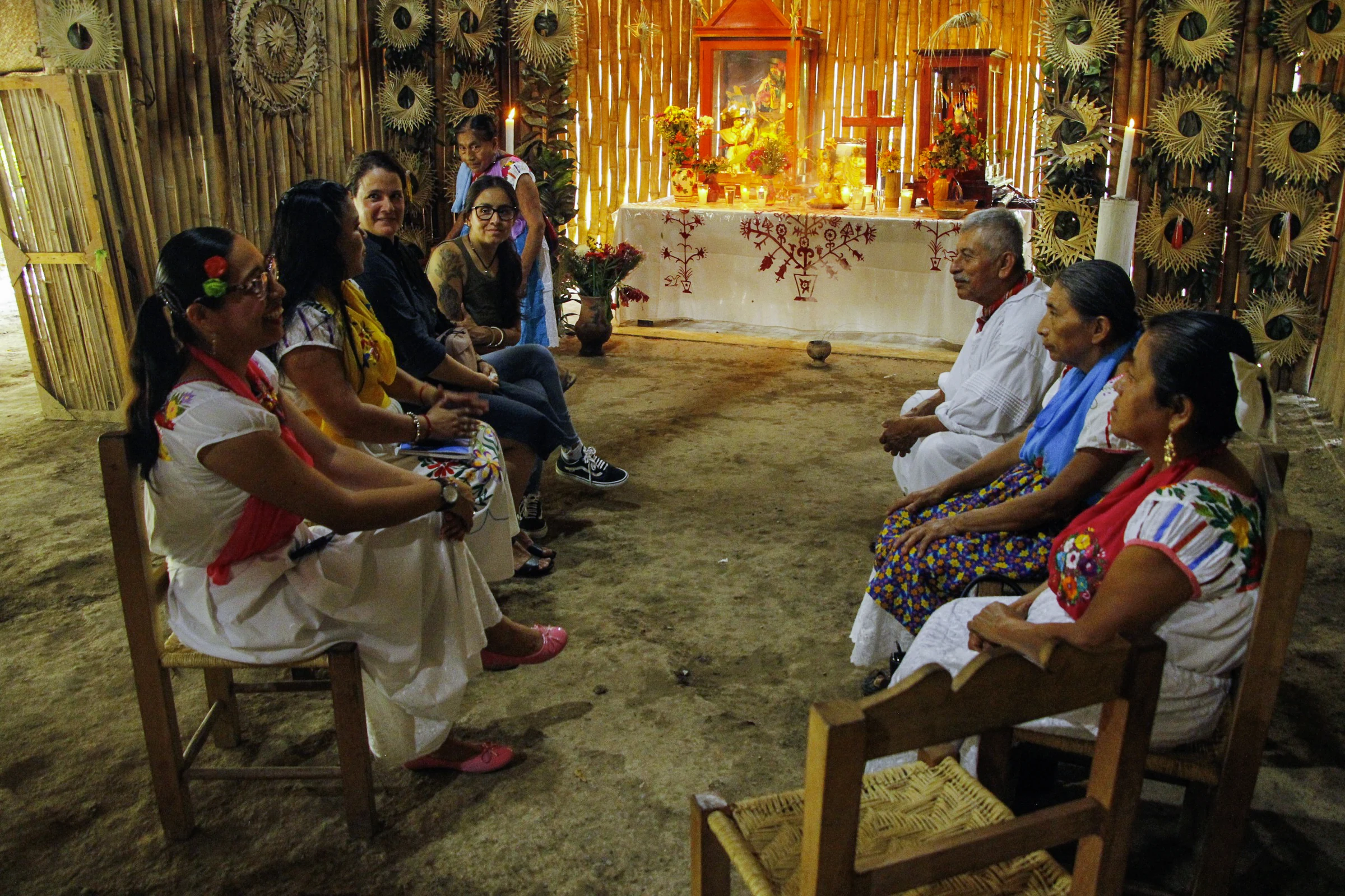
PEOPLE
The people who hold the knowledge. Research begins with custodians, practitioners and their chosen priorities.
Explore source (opens in a new tab)Tutunaku teachers and knowledge holders · Mexico
Meeting documented by UNESCO · 2026 · Record ↗ (opens in a new tab)
Photo: Casa de Medios del Centro de Artes Indígenas CAI (opens in a new tab) · CC BY-SA 4.0 (opens in a new tab)
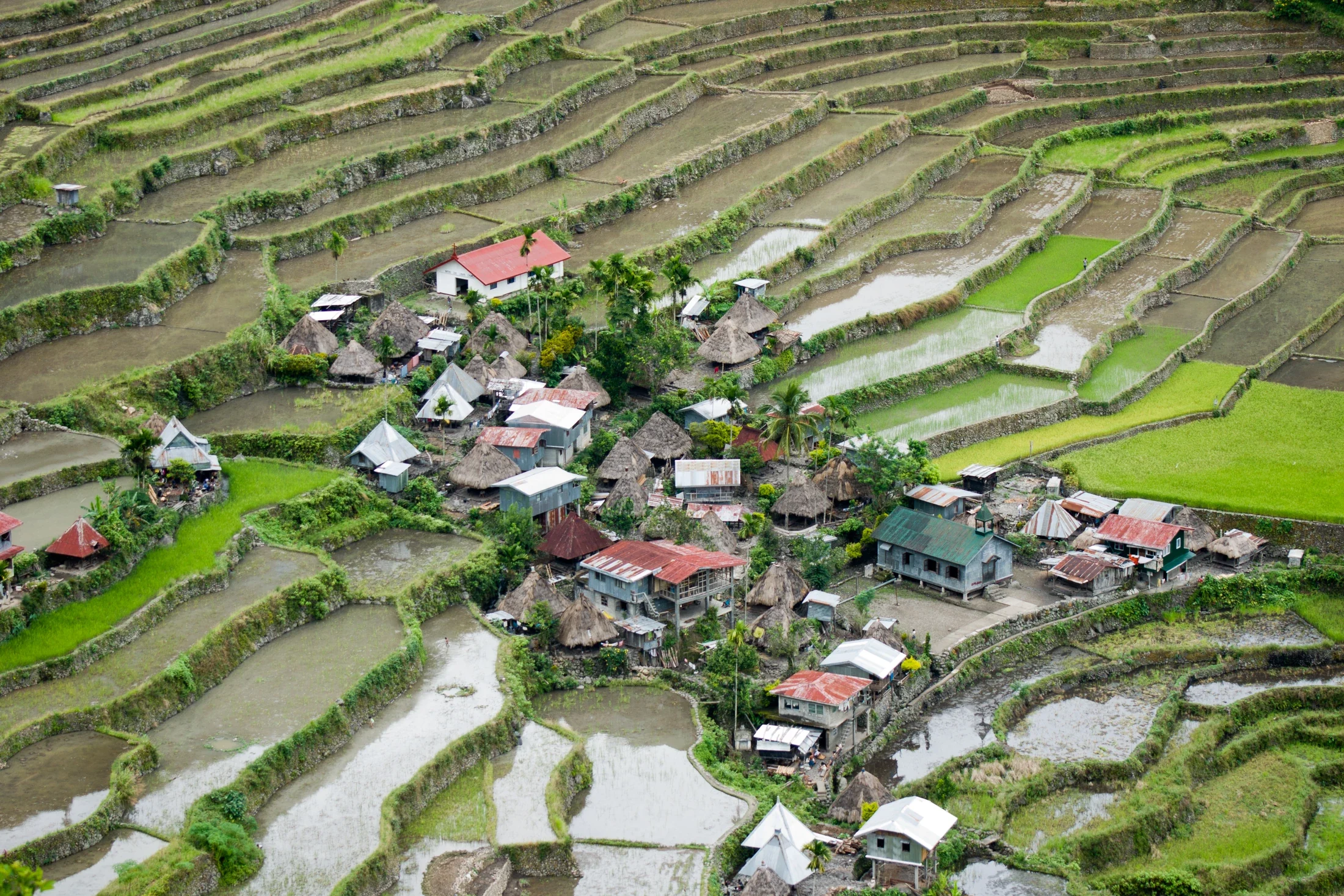
PLACE / LANDSCAPE
Land, memory and ways of living. Explore the relationships between place, ecology, belonging and everyday practice.
Explore source (opens in a new tab)Ifugao rice-terrace landscape · Philippines
UNESCO World Heritage inscription · 1995 · Record ↗ (opens in a new tab)
Photo: CEphoto, Uwe Aranas (opens in a new tab) · CC BY-SA 4.0 (opens in a new tab)
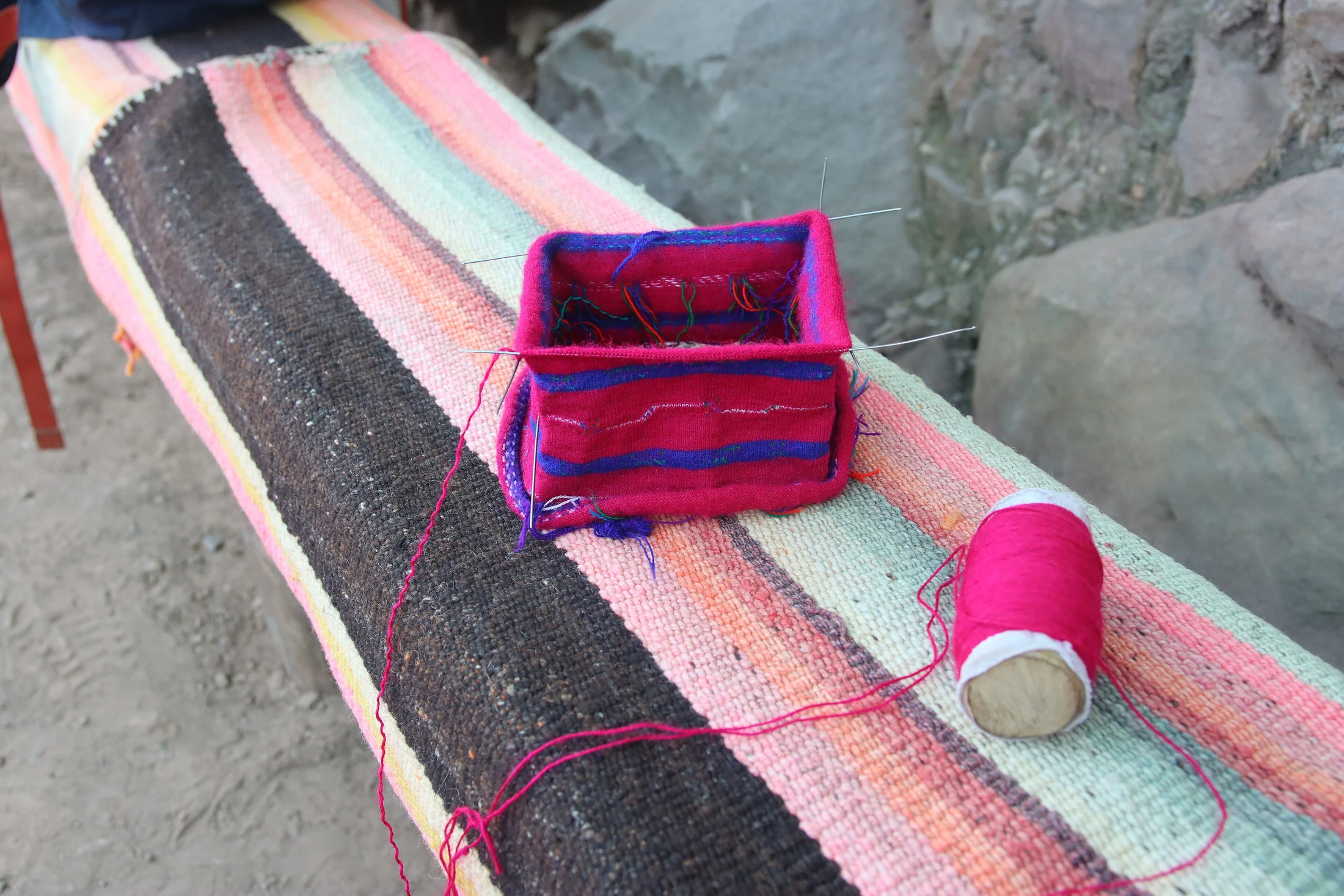
OBJECTS
Objects carry relationships. Consider who makes, uses and cares for an object, and what it means in its own setting.
Explore source (opens in a new tab)Taquile knitted and woven textiles · Peru
UNESCO intangible heritage inscription · 2008 · Record ↗ (opens in a new tab)
Photo: Draceane (opens in a new tab) · CC BY-SA 4.0 (opens in a new tab)
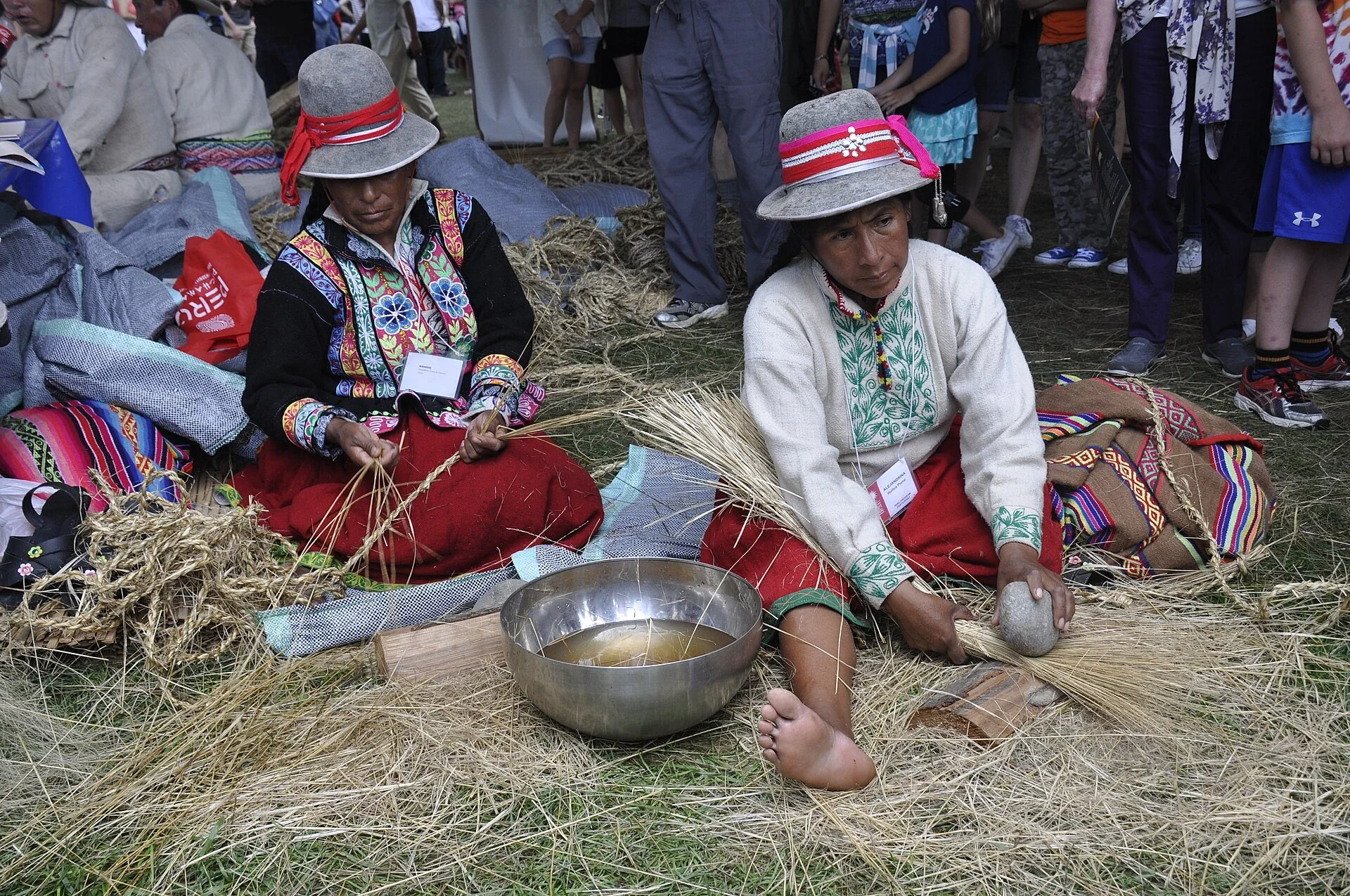
TECHNIQUES
Skill is a living practice. Understand making and maintenance through practitioners, with permission to learn and document.
Explore source (opens in a new tab)Quechua rope-making demonstration · Washington, DC
Q’eswachaka knowledge: UNESCO inscription · 2013 · Record ↗ (opens in a new tab)
Photo: Jarek Tuszyński (opens in a new tab) · CC BY 4.0 (opens in a new tab)
KNOWLEDGE
Knowledge is held in context. Attend to oral, ecological and practical learning while respecting protected and sacred knowledge.
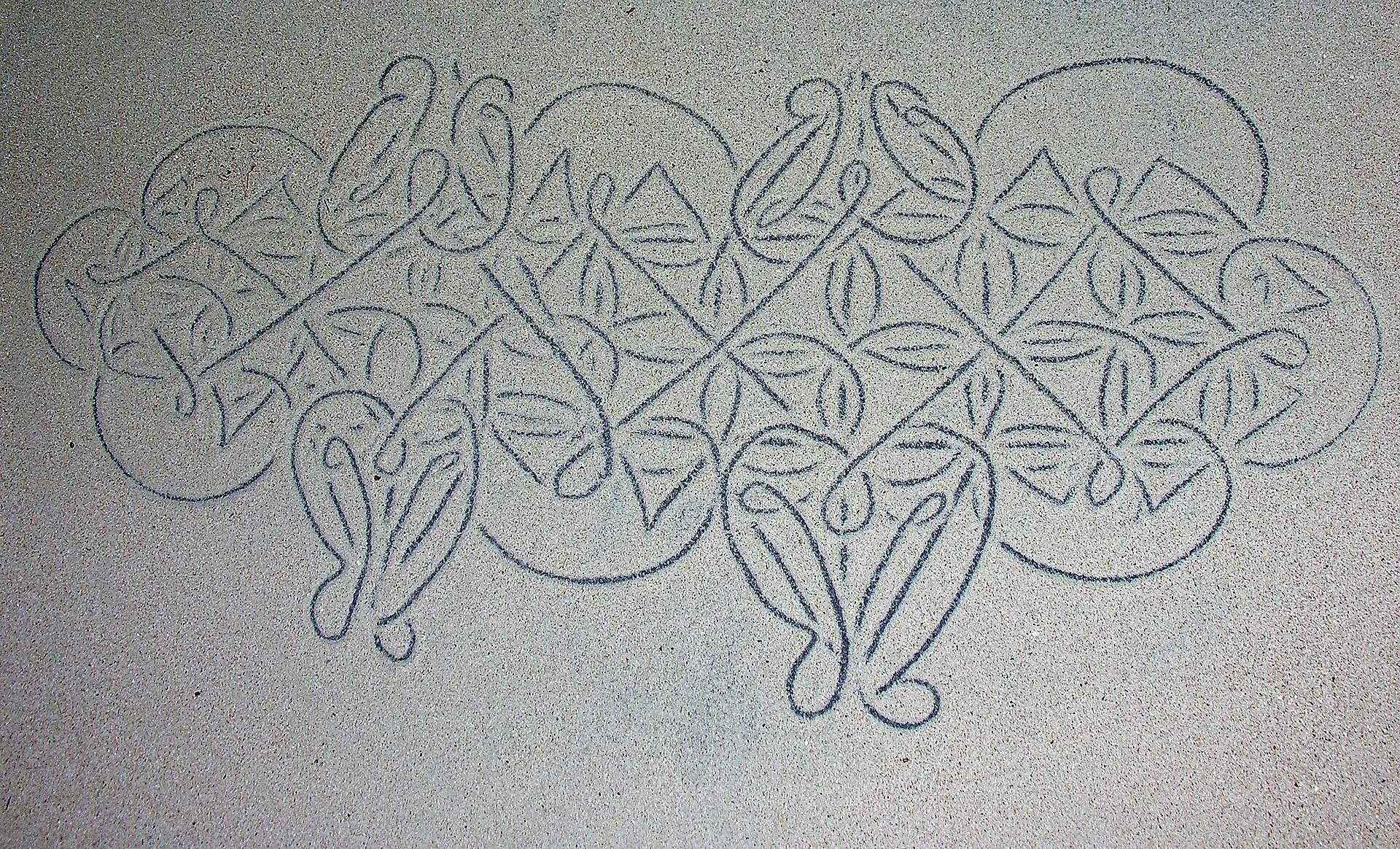
Explore source (opens in a new tab)Vanuatu sand drawing · Vanuatu
UNESCO intangible heritage inscription · 2008 · Record ↗ (opens in a new tab)
Photo: PhillipC (opens in a new tab) · CC BY 2.0 (opens in a new tab)
MATERIALS
Materials connect culture and ecology. Study fibres, wood, earth and other resources through local stewardship and responsible use.
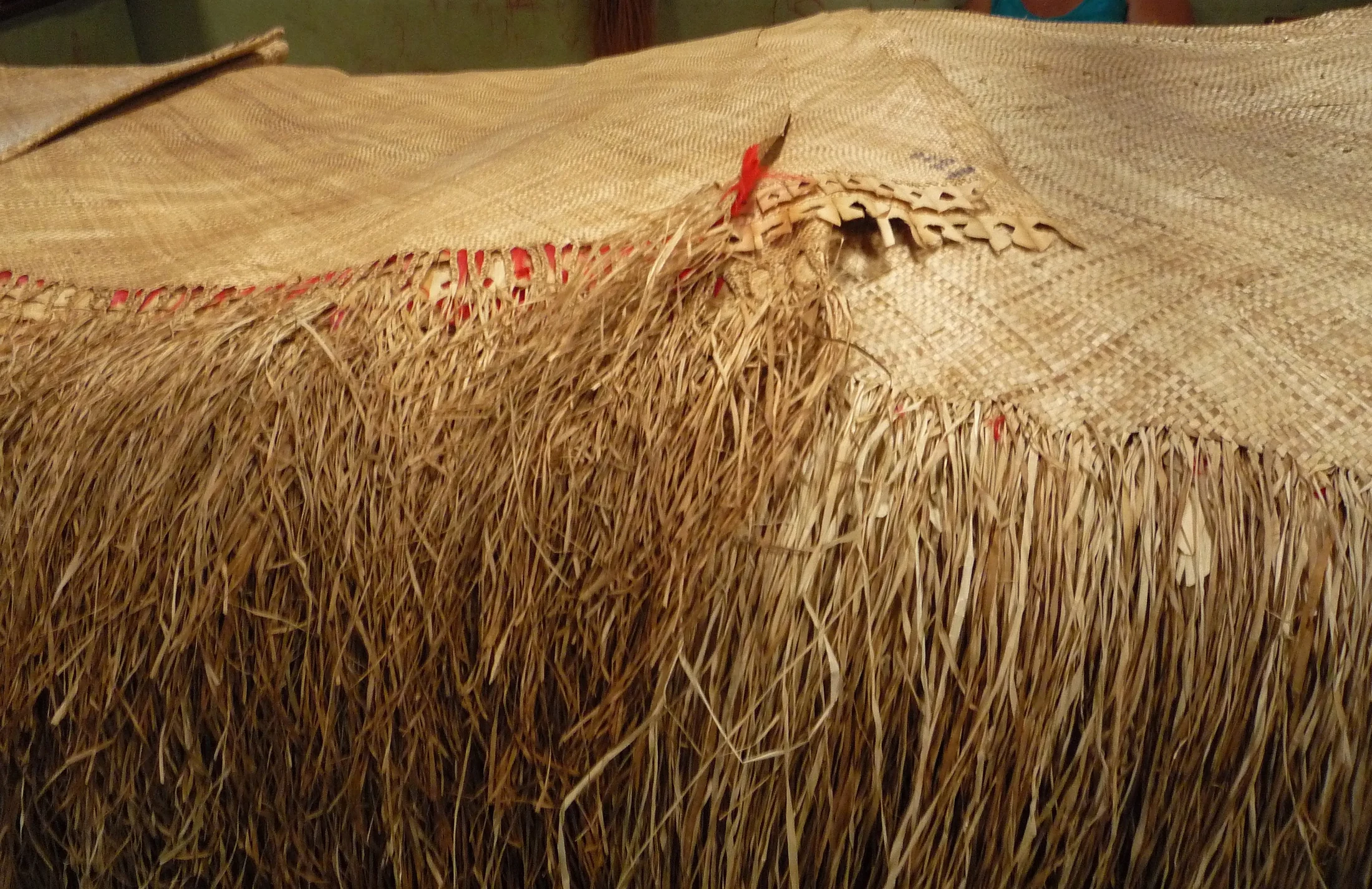
Explore source (opens in a new tab)Traditional Samoan mat · Samoa
‘Ie Samoa: UNESCO inscription · 2019 · Record ↗ (opens in a new tab)
Photo: Sarah Kelemen (opens in a new tab) · CC BY 2.0 (opens in a new tab)
Our intended value-creation approach
Empower the people.
Keep the value with them.
Social entrepreneurship education and training, co-designed with communities, with value governance and fair benefit sharing at every stage.
A proposed learning pathway. The photographs below show independently documented heritage and training settings.
 01
01Listen & define
Begin with community priorities. Agree who represents the community, how decisions are made, and what should remain private.
Community-defined purpose
Local languages, customary protocols and individual consent shape participation.
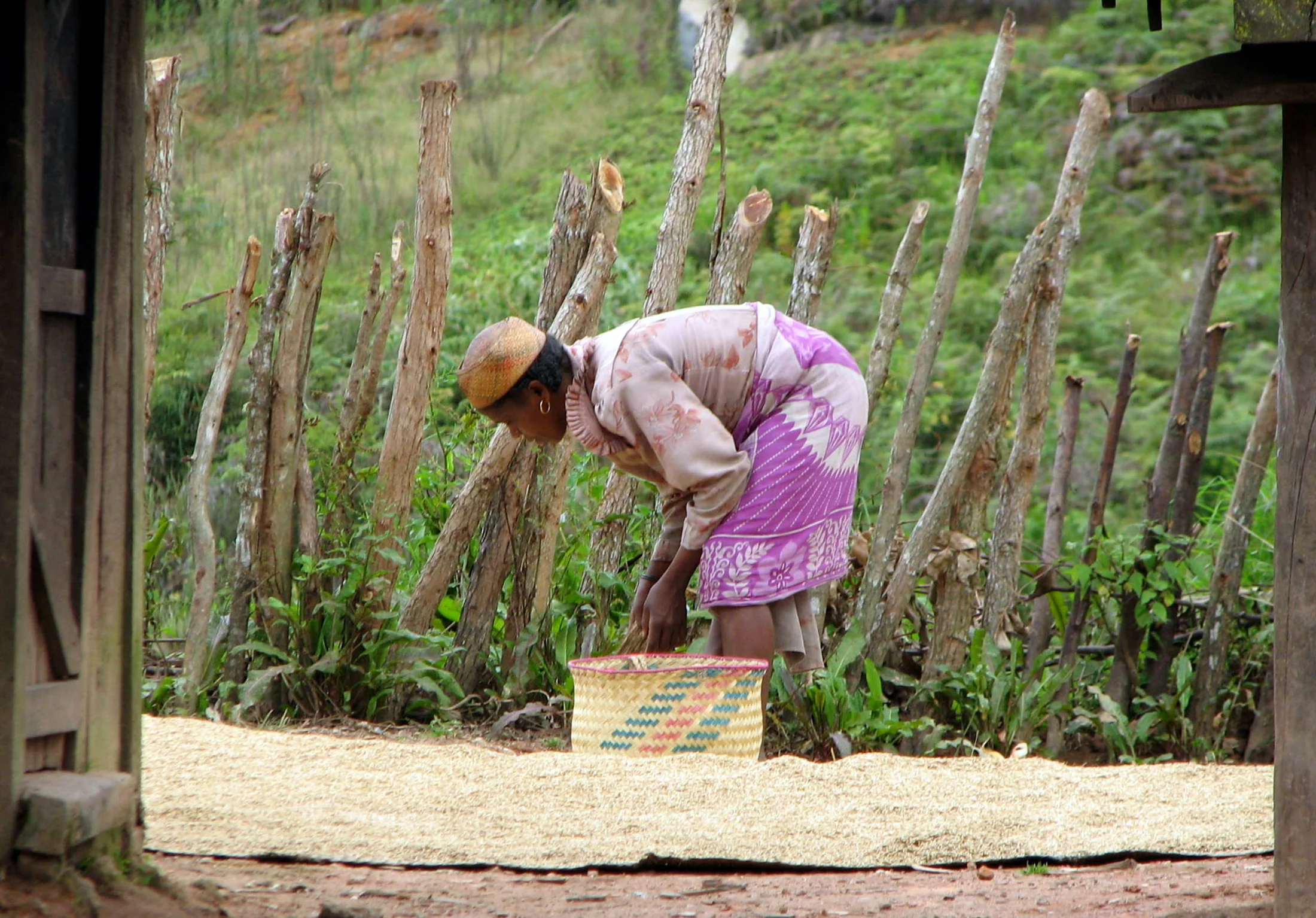
Photo, context & source
A Zafimaniry woman in Ifasina, Madagascar, 2007.
Photograph: Bernard Gagnon (opens in a new tab) · CC BY-SA 3.0 (opens in a new tab). Resized and converted to WebP; display cropping may vary. The photo adaptation retains this licence.
UNESCO · Zafimaniry woodcraft (opens in a new tab) · Original image (opens in a new tab)
02Co-design the learning
Develop education and training with local teachers, artisans, elders, women and young people. They determine what is appropriate to share.
Learn with the custodians
Adapt the curriculum, pace and setting to community choices.
Photo, context & source
Teachers and knowledge holders of the Centre for Indigenous Arts meeting with UNESCO in Papantla, Mexico. Published 2026.
Photograph: Casa de Medios del Centro de Artes Indígenas CAI (opens in a new tab) · CC BY-SA 4.0 (opens in a new tab). Resized and converted to WebP; display cropping may vary. The photo adaptation retains this licence.
UNESCO · Tutunaku teachers and living heritage (opens in a new tab) · Original image (opens in a new tab)
 03
03Build enterprise capabilities
Offer practical learning in social entrepreneurship, financial literacy, costing, cooperation, communication and negotiation for community-approved livelihood activities.
Capability before expansion
Protect cultural meaning and ecological limits; do not make heritage itself a commodity.
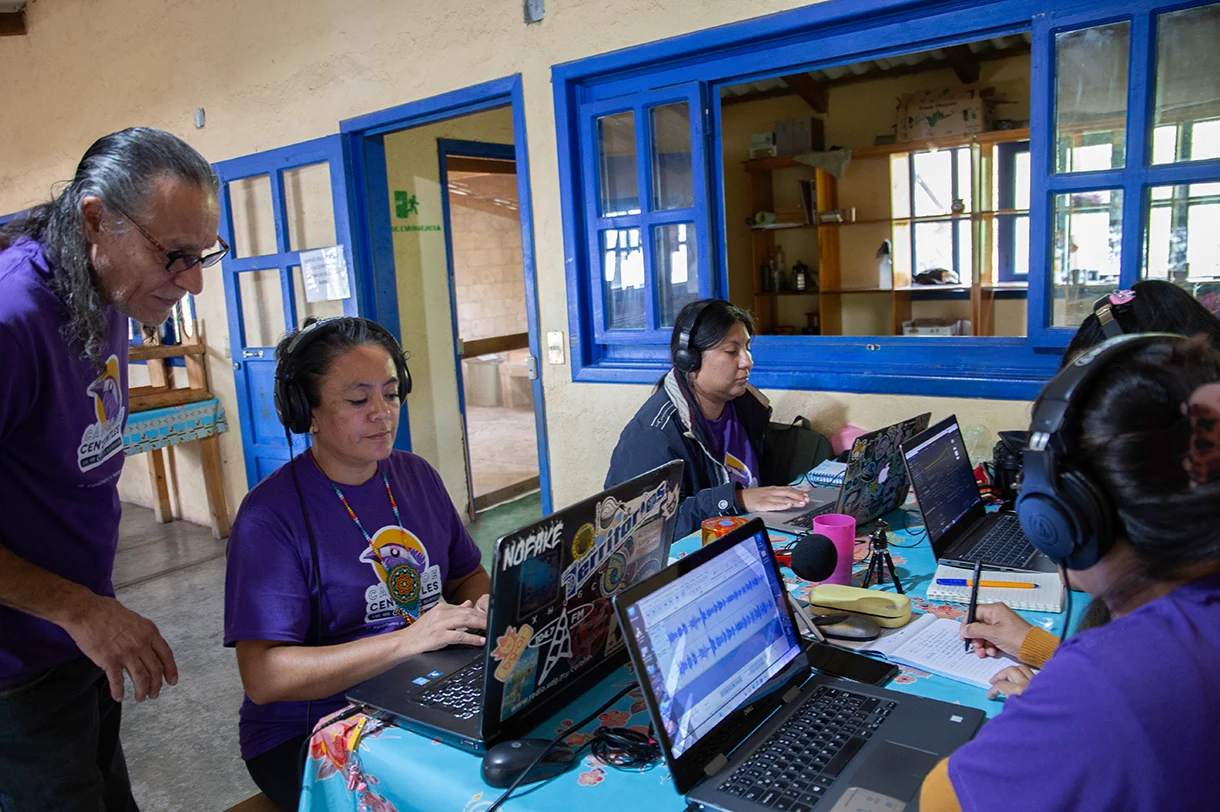
Photo, context & source
Community media participants editing radio content during training in Mexico. Published 2026.
Photograph: REDES A.C. (opens in a new tab) · CC BY-SA 4.0 (opens in a new tab). Resized and converted to WebP; display cropping may vary. The photo adaptation retains this licence.
UNESCO · Community media training in Mexico (opens in a new tab) · Original image (opens in a new tab)
04Govern the value
Co-design rules for permission, attribution, cultural use, partnerships and accountability before any activity begins. Community approval is decisive.
Authority stays local
Agree benefit-sharing arrangements in advance, with clear responsibilities and review.
Photo, context & source
Quechua rope-making demonstrators at the Smithsonian Folklife Festival, Washington, DC, 2015.
Photograph: Jarek Tuszyński (opens in a new tab) · CC BY 4.0 (opens in a new tab). Resized and converted to WebP; display cropping may vary. The photo adaptation retains this licence.
UNESCO · Q’eswachaka bridge knowledge (opens in a new tab) · Original image (opens in a new tab)
05Share & review fairly
Make payments, costs and benefits understandable. Communities choose how benefits support practitioners, cultural continuity and collective wellbeing.
Fairness that can be checked
Review outcomes together; change or stop activities when the community decides.
Photo, context & source
A Samoan traditional mat photographed at Apia Market, Samoa, 2009.
Photograph: Sarah Kelemen (opens in a new tab) · CC BY 2.0 (opens in a new tab). Resized and converted to WebP; display cropping may vary. The photo adaptation retains this licence.
UNESCO · ‘Ie Samoa fine mats (opens in a new tab) · Original image (opens in a new tab)
Learning should increase people’s ability to choose, negotiate and govern their own futures.
Our Values & Behaviours
How we intend to work matters as much as what we hope to achieve.
Six commitments guide the research, the learning and every relationship.
Read all six commitments
Community authority
They control participation, cultural use, publication, partnerships and benefit arrangements within our work. Their decisions are final for our involvement.
In practice: We proceed only within the boundaries they choose; a refusal ends the proposal.
Co-design
Community members help define the questions, learning process, methods and measures of success from the beginning. Local expertise shapes the work.
In practice: We make room for elders, practitioners, women and young people, through community-chosen processes.
Ongoing consent
We seek free, prior, informed and ongoing consent. Collective agreement does not replace individual choice. People can decline, pause or withdraw their participation.
In practice: We revisit permission when purposes, uses or partners change.
Cultural integrity
Sacred, restricted and sensitive knowledge stays with its custodians. Learning and livelihood activities must protect cultural context and the landscapes that sustain it.
In practice: We respect limits on access, recording and disclosure, including a decision to share nothing.
Fairness & transparency
Communities and practitioners help set fair terms before work begins, including payment, recognition, shared benefits and responsibilities.
In practice: We explain costs and decisions plainly, credit contributions, and provide ways to question or challenge the process.
Learning & accountability
Research should be useful to the people who inform it. We return agreed findings in accessible forms and invite community review before release.
In practice: We correct mistakes, honour commitments, and stop when community approval is withdrawn.
Reference frameworks: UNESCO ethical principles (opens in a new tab) · United Nations Declaration on the Rights of Indigenous Peoples (opens in a new tab)
Trace the photograph. Read the record.
Sources & Image Credits
Every image is a real documentary photograph. Photo permissions and heritage sources are listed separately so each can be checked.
UNESCO
Living heritage & its communities
Community participation, transmission and safeguarding of intangible cultural heritage.
Read source (opens in a new tab)UNITED NATIONS
Community authority & cultural rights
Indigenous participation, knowledge, heritage and resource priorities in the UN Declaration. Official text reproduced by the Government of Canada.
Read source (opens in a new tab)UNESCO
Ethics in heritage work
Community leadership, continuing informed consent and respect for custodians and their interests.
Read source (opens in a new tab)A Zafimaniry woman in Ifasina, Madagascar, 2007.
A Zafimaniry woman in Ifasina, Madagascar, 2007.
Photograph: Bernard Gagnon (opens in a new tab) · CC BY-SA 3.0 (opens in a new tab). Resized and converted to WebP; display cropping may vary. The photo adaptation retains this licence.
UNESCO · Zafimaniry woodcraft (opens in a new tab) · Original image (opens in a new tab)
A batik artisan among textiles and tools at the Yogyakarta palace, Indonesia, 2019.
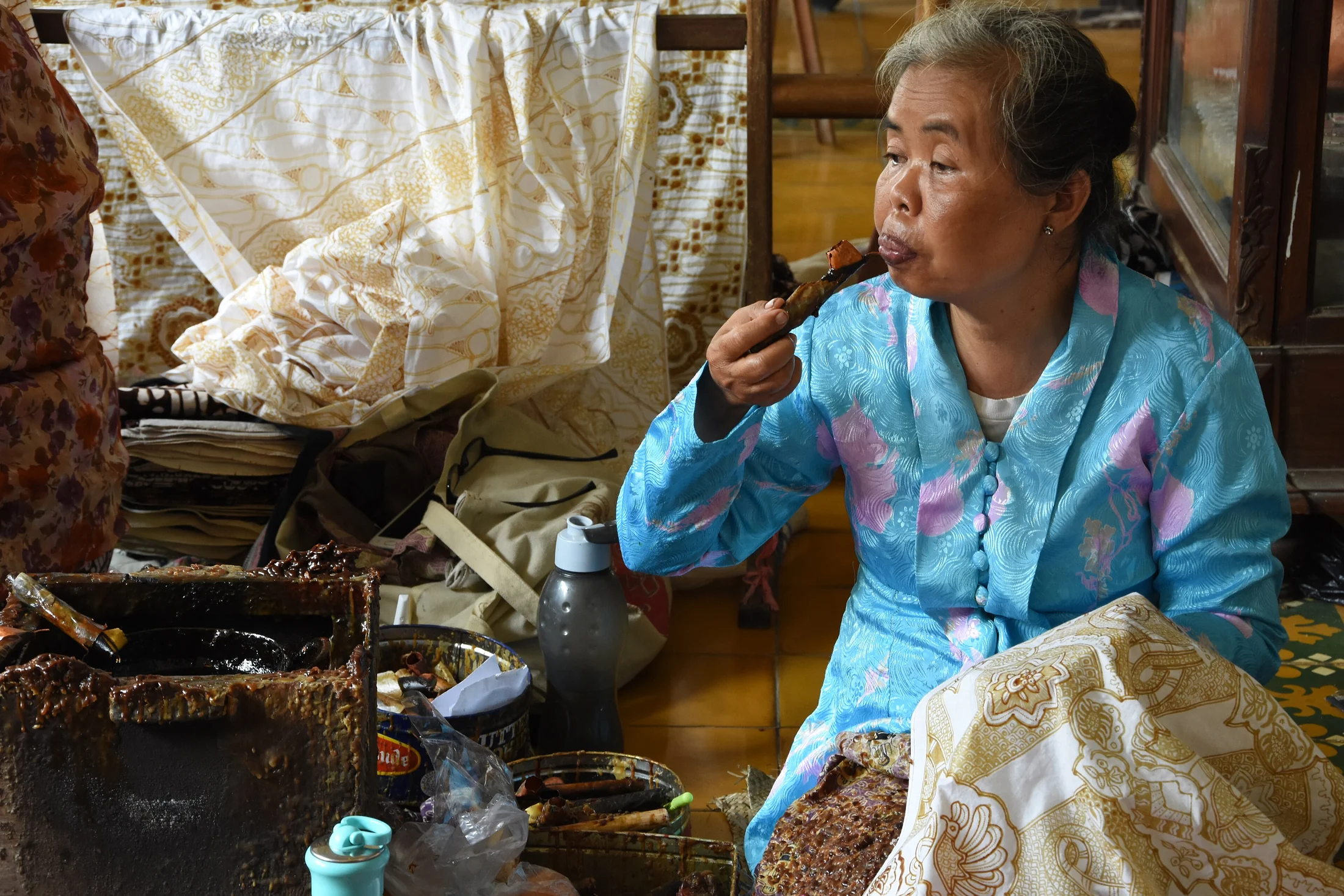
A batik artisan among textiles and tools at the Yogyakarta palace, Indonesia, 2019.
Photograph: Danangfirmanto (opens in a new tab) · CC BY-SA 4.0 (opens in a new tab). Resized and converted to WebP; display cropping may vary. The photo adaptation retains this licence.
UNESCO · Indonesian batik (opens in a new tab) · Original image (opens in a new tab)
Teachers and knowledge holders of the Centre for Indigenous Arts meeting with UNESCO in Papantla, Mexico. Published 2026.
Teachers and knowledge holders of the Centre for Indigenous Arts meeting with UNESCO in Papantla, Mexico. Published 2026.
Photograph: Casa de Medios del Centro de Artes Indígenas CAI (opens in a new tab) · CC BY-SA 4.0 (opens in a new tab). Resized and converted to WebP; display cropping may vary. The photo adaptation retains this licence.
UNESCO · Tutunaku teachers and living heritage (opens in a new tab) · Original image (opens in a new tab)
Community media participants editing radio content during training in Mexico. Published 2026.
Community media participants editing radio content during training in Mexico. Published 2026.
Photograph: REDES A.C. (opens in a new tab) · CC BY-SA 4.0 (opens in a new tab). Resized and converted to WebP; display cropping may vary. The photo adaptation retains this licence.
UNESCO · Community media training in Mexico (opens in a new tab) · Original image (opens in a new tab)
A man knitting on Taquile Island, Peru, 2006.
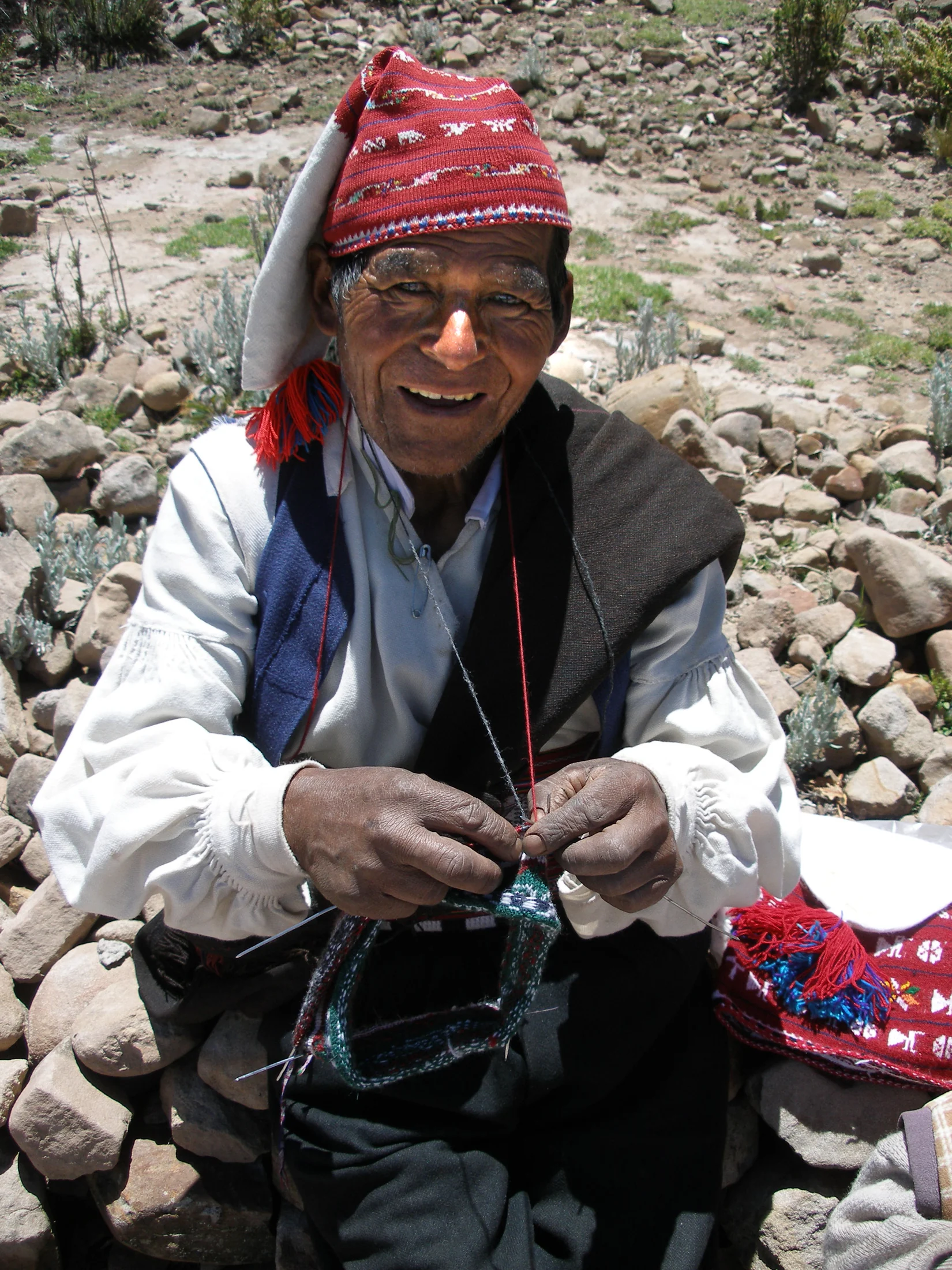
A man knitting on Taquile Island, Peru, 2006.
Photograph: Thomas Quine (opens in a new tab) · CC BY 2.0 (opens in a new tab). Resized and converted to WebP; display cropping may vary. The photo adaptation retains this licence.
UNESCO · Taquile textile art (opens in a new tab) · Original image (opens in a new tab)
Knitted and woven textile objects on Taquile Island, Peru, 2023.
Knitted and woven textile objects on Taquile Island, Peru, 2023.
Photograph: Draceane (opens in a new tab) · CC BY-SA 4.0 (opens in a new tab). Resized and converted to WebP; display cropping may vary. The photo adaptation retains this licence.
UNESCO · Taquile textile art (opens in a new tab) · Original image (opens in a new tab)
Tenores di Bitti Mialinu Pira, a canto a tenore group from Sardinia, Italy.
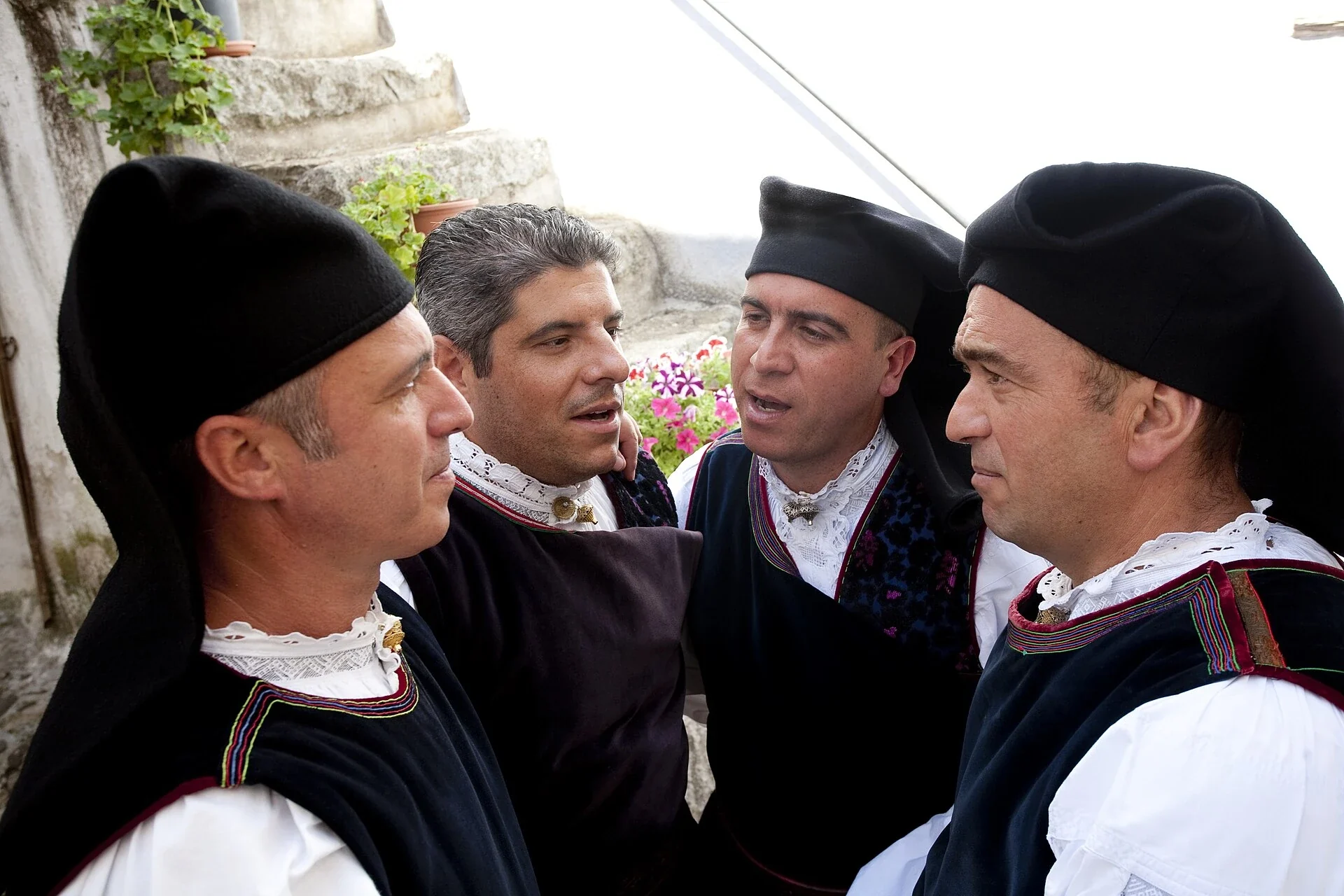
Tenores di Bitti Mialinu Pira, a canto a tenore group from Sardinia, Italy.
Photograph: Sardegnabella (opens in a new tab) · CC BY-SA 3.0 (opens in a new tab). Resized and converted to WebP; display cropping may vary. The photo adaptation retains this licence.
UNESCO · Sardinian pastoral songs (opens in a new tab) · Original image (opens in a new tab)
Traditional performers from Futuna Island, Vanuatu, photographed in 2013.
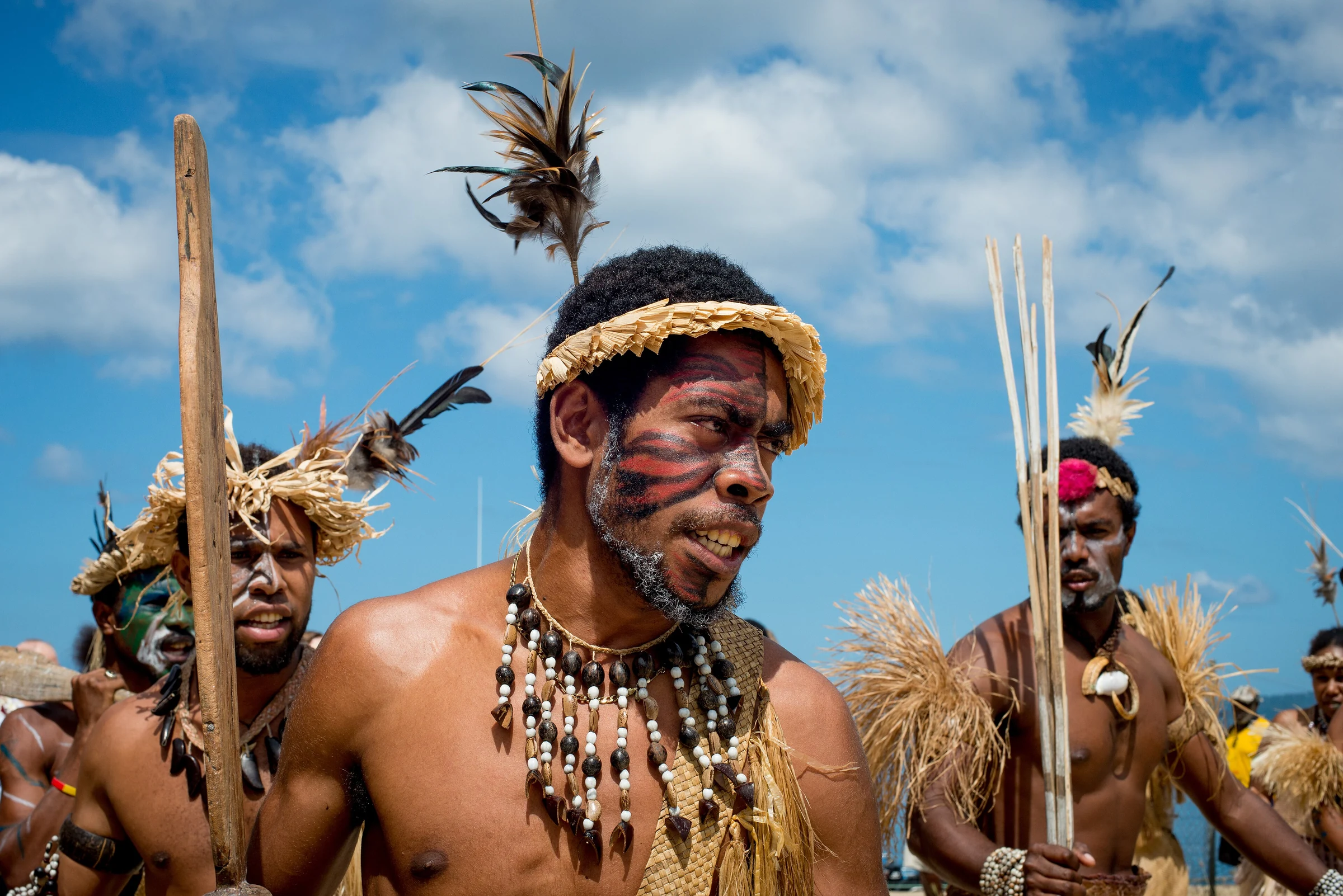
Traditional performers from Futuna Island, Vanuatu, photographed in 2013.
Photograph: Graham Crumb / Imagicity.com (opens in a new tab) · CC BY-SA 3.0 (opens in a new tab). Resized and converted to WebP; display cropping may vary. The photo adaptation retains this licence.
Photo record · Futuna performers, Vanuatu (opens in a new tab) · Original image (opens in a new tab)
Batad rice terraces in the Philippine Cordilleras, Philippines.
Batad rice terraces in the Philippine Cordilleras, Philippines.
Photograph: CEphoto, Uwe Aranas (opens in a new tab) · CC BY-SA 4.0 (opens in a new tab). Resized and converted to WebP; display cropping may vary. The photo adaptation retains this licence.
UNESCO · Philippine Cordilleras rice terraces (opens in a new tab) · Original image (opens in a new tab)
Quechua rope-making demonstrators at the Smithsonian Folklife Festival, Washington, DC, 2015.
Quechua rope-making demonstrators at the Smithsonian Folklife Festival, Washington, DC, 2015.
Photograph: Jarek Tuszyński (opens in a new tab) · CC BY 4.0 (opens in a new tab). Resized and converted to WebP; display cropping may vary. The photo adaptation retains this licence.
UNESCO · Q’eswachaka bridge knowledge (opens in a new tab) · Original image (opens in a new tab)
A sand drawing from Vanuatu, photographed in 2007.
A sand drawing from Vanuatu, photographed in 2007.
Photograph: PhillipC (opens in a new tab) · CC BY 2.0 (opens in a new tab). Resized and converted to WebP; display cropping may vary. The photo adaptation retains this licence.
UNESCO · Vanuatu sand drawings (opens in a new tab) · Original image (opens in a new tab)
A Samoan traditional mat photographed at Apia Market, Samoa, 2009.
A Samoan traditional mat photographed at Apia Market, Samoa, 2009.
Photograph: Sarah Kelemen (opens in a new tab) · CC BY 2.0 (opens in a new tab). Resized and converted to WebP; display cropping may vary. The photo adaptation retains this licence.
UNESCO · ‘Ie Samoa fine mats (opens in a new tab) · Original image (opens in a new tab)
Adapted photographs retain the licences linked above. Fonts: Playfair Display, SIL Open Font License. Photographs illustrate their documented settings; the education and training pathway on this page describes our intended approach.