Knowledge lives on.
Living heritage
Exploring Indigenous knowledge, ancient heritage and traditional craft through the people, places and materials that sustain them.
A global context for Indigenous Peoples
Published estimates and programmes · linked to their sourcesEstimated Indigenous people worldwide
United Nations ↗Where Indigenous Peoples live, according to the UN
United Nations ↗Distinct Indigenous groups in FAO’s global overview
FAO overview ↗International Decade of Indigenous Languages
UNESCO programme ↗Our living world
Kente
Akan & Ewe textile traditions
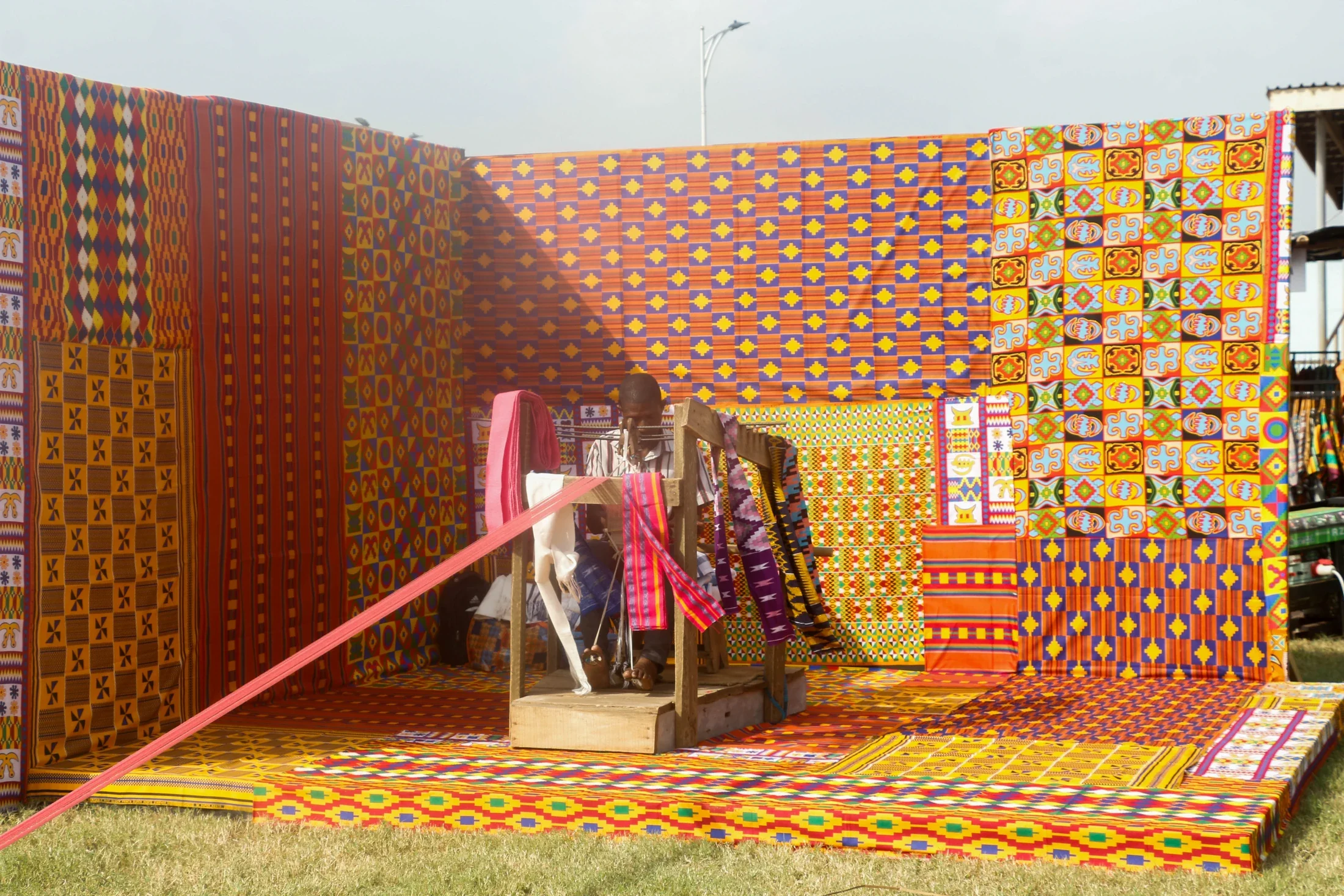
Ghanaian kente weavers use horizontal looms to make strips of silk, cotton or rayon. Colours and designs carry social meaning; finished cloths can take their names from proverbs, sayings and shared histories.
heritage recordUNESCO Intangible Cultural Heritage · 2024
Kente weaving at Afrochella Festival, Ghana, 2021.
Photo: Fquasie · CC BY-SA 4.0
Data & source notes
UNESCO heritage record ↗
Practice, materials, meanings, transmission and 2024 inscription.
Ghana community inventory · PDF ↗
Identifies the Akan and Ewe communities and production locations.
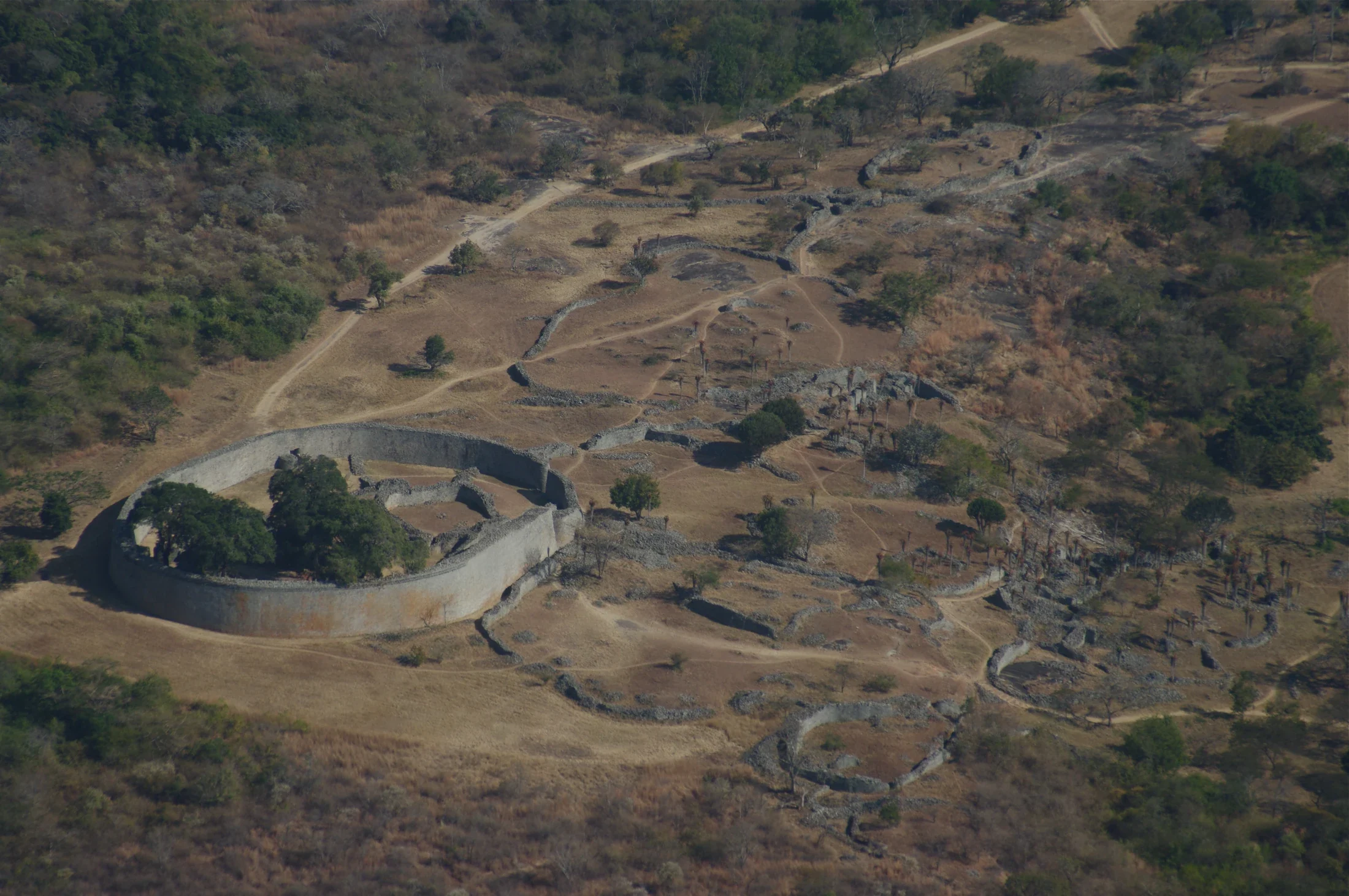
Great Zimbabwe
Heritage of the Shona civilization
Great Zimbabwe records the Shona civilization’s knowledge of stone construction and urban life. Granite enclosures, carefully laid masonry and archaeological finds reveal a major trading centre whose connections reached beyond southern Africa.
heritage recordUNESCO World Heritage · 1986
The Great Enclosure and surrounding ruins at Great Zimbabwe.
Photo: Janice Bell · CC BY-SA 4.0
Data & source notes
UNESCO property record & data ↗
Shona history, 11th–15th century occupation, granite construction, dry-stone masonry, trade and 1986 inscription.
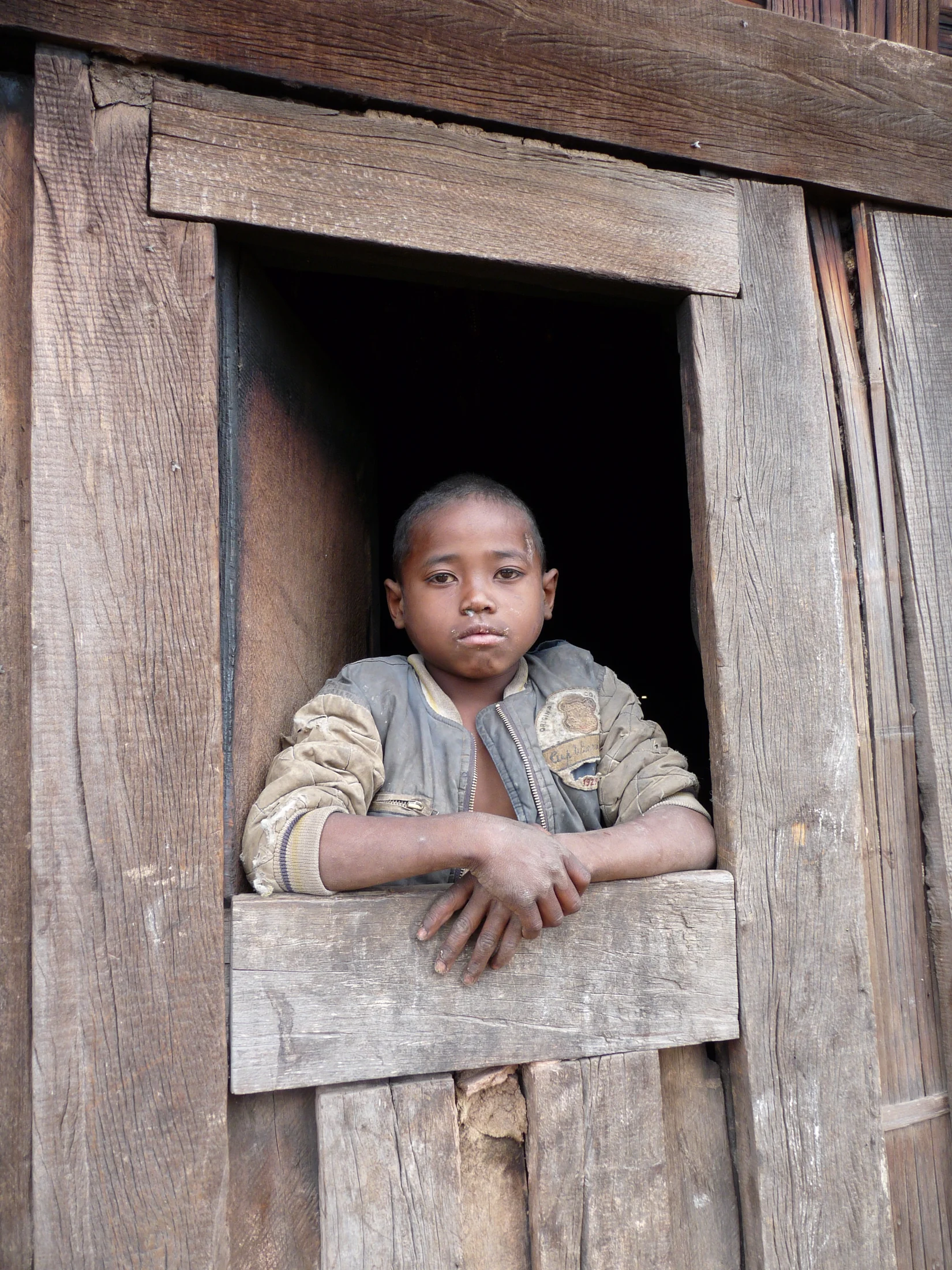
Zafimaniry
Zafimaniry communities
Zafimaniry carpenters and craftworkers shape houses, furniture and everyday objects through detailed knowledge of wood. UNESCO describes the use of twenty endemic tree species, selected for different structural and decorative purposes.
heritage recordUNESCO Intangible Cultural Heritage · 2008
A child at a wooden window in the Zafimaniry region, Madagascar, 2011.
Photo: krishna naudin · CC BY-SA 2.0
Data & source notes
UNESCO heritage record ↗
Wood knowledge, twenty tree species, community context and 2008 inscription.
UNESCO safeguarding project ↗
Documentation and safeguarding of Zafimaniry woodcraft.
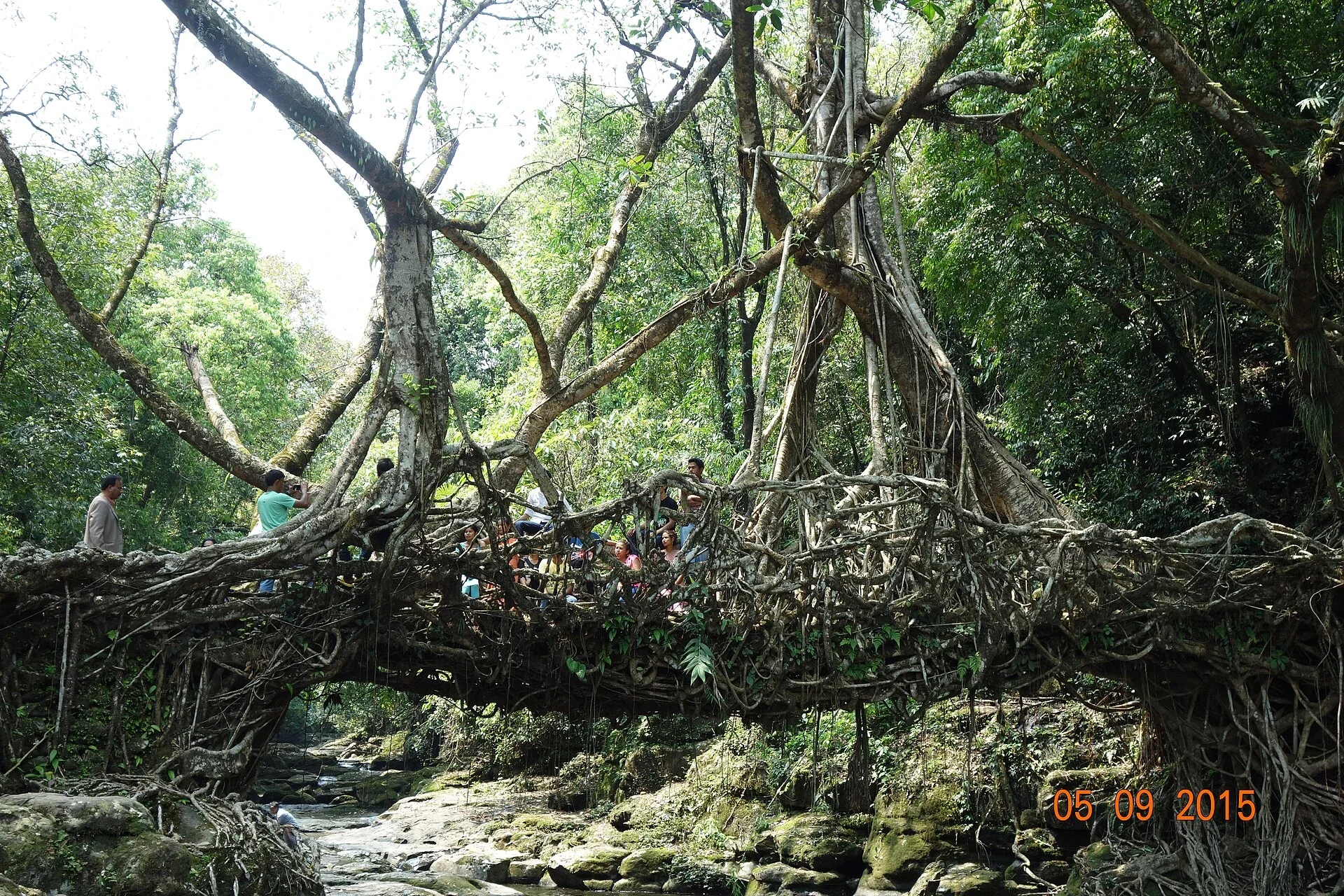
Living-root bridges
Khasi communities · Meghalaya
Khasi communities nurture and intertwine the aerial roots of Ficus trees into living bridges. Generations share the work of growing and caring for these structures, connecting villages, farms and markets in Meghalaya’s demanding monsoon landscape.
heritage recordUNESCO Tentative List · submitted 2022
A living-root bridge near Mawlynnong, Meghalaya, India.
Photo: Chaduvari · CC BY-SA 4.0
Data & source notes
India’s UNESCO Tentative List record ↗
Khasi knowledge, Ficus roots, village connections and the 17 February 2022 submission. This is a Tentative List entry.
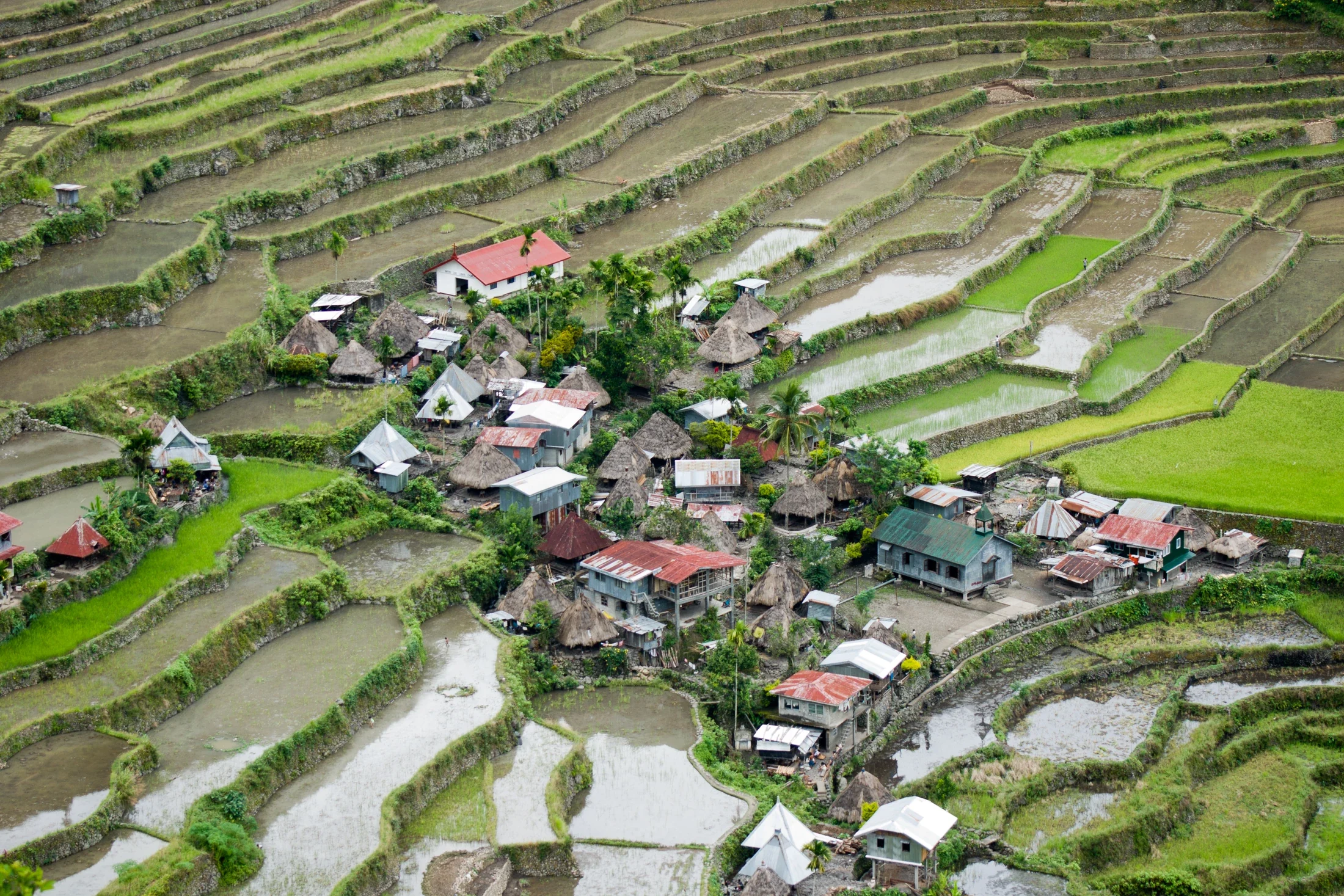
Ifugao rice terraces
Ifugao communities · Philippine Cordilleras
Ifugao farmers shape steep terrain into stone- and mud-walled rice terraces. Water harvested from mountain forests moves through irrigation channels, while community knowledge connects cultivation, forest care, terrace maintenance and the sharing of water.
heritage recordUNESCO World Heritage · 1995
Batad rice terraces and village, one of the five inscribed clusters.
Photo: CEphoto, Uwe Aranas · CC BY-SA 4.0
Data & source notes
UNESCO property record & data ↗
Five inscribed clusters, Ifugao communities, terrace and irrigation systems and 1995 inscription.
UNESCO · Ifugao knowledge and climate resilience ↗
The relationship between traditional farming knowledge, irrigation and resilience.
Batik
Indonesian batik-making communities
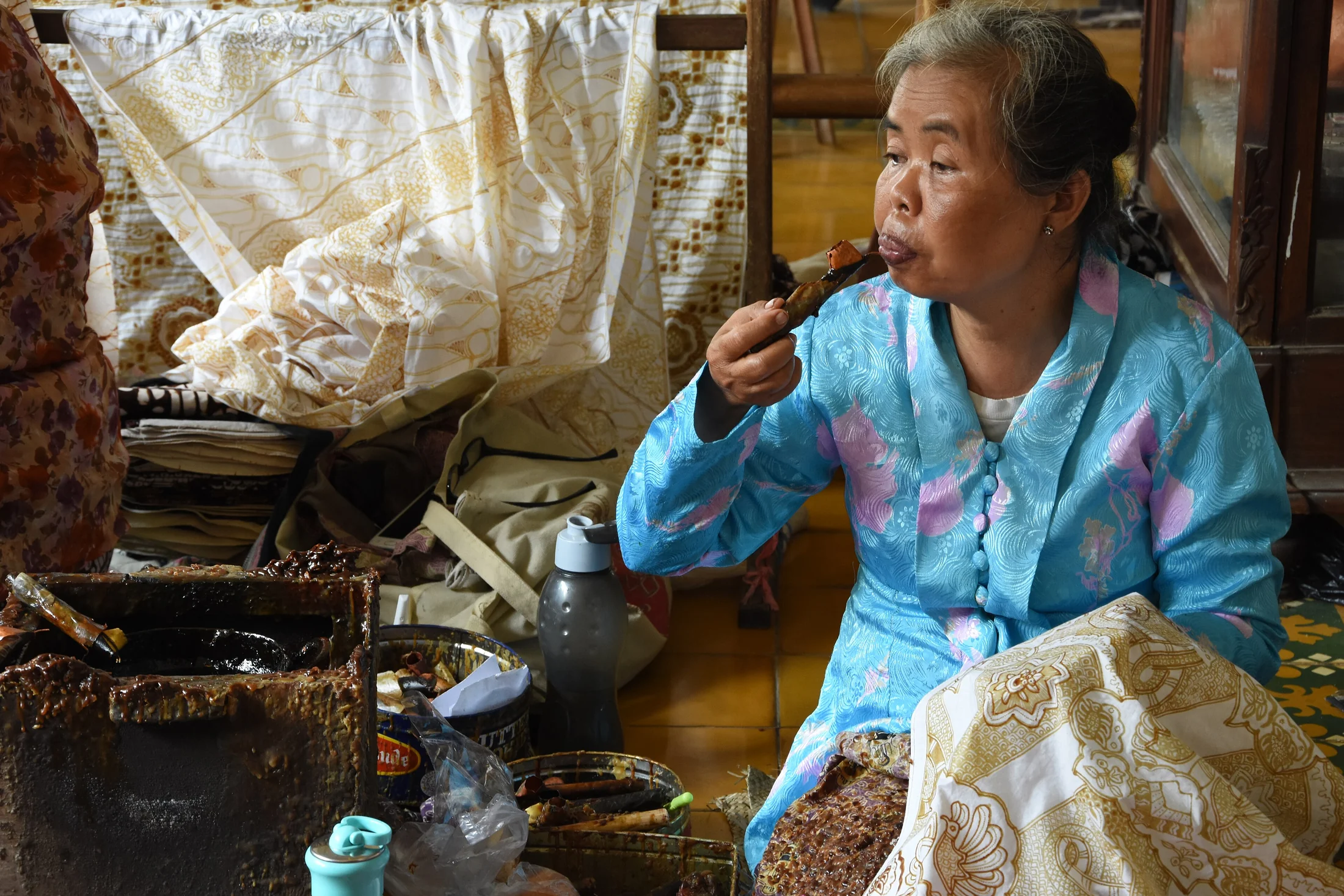
Batik makers apply hot wax to cotton or silk before dyeing. The wax protects selected areas, allowing colours and patterns to develop through repeated stages. Family learning and the meanings of designs connect the craft to cultural identity.
heritage recordUNESCO Intangible Cultural Heritage · 2009
A batik artisan among textiles and workshop tools at the Yogyakarta palace, Indonesia, 2019.
Photo: Danangfirmanto · CC BY-SA 4.0
Data & source notes
UNESCO heritage record ↗
Wax-resist process, cotton and silk, symbolic meanings and 2009 inscription.
UNESCO inscription decision ↗
Community involvement, cultural identity and transmission.
Q’eswachaka
Quechua-speaking communities · Cusco
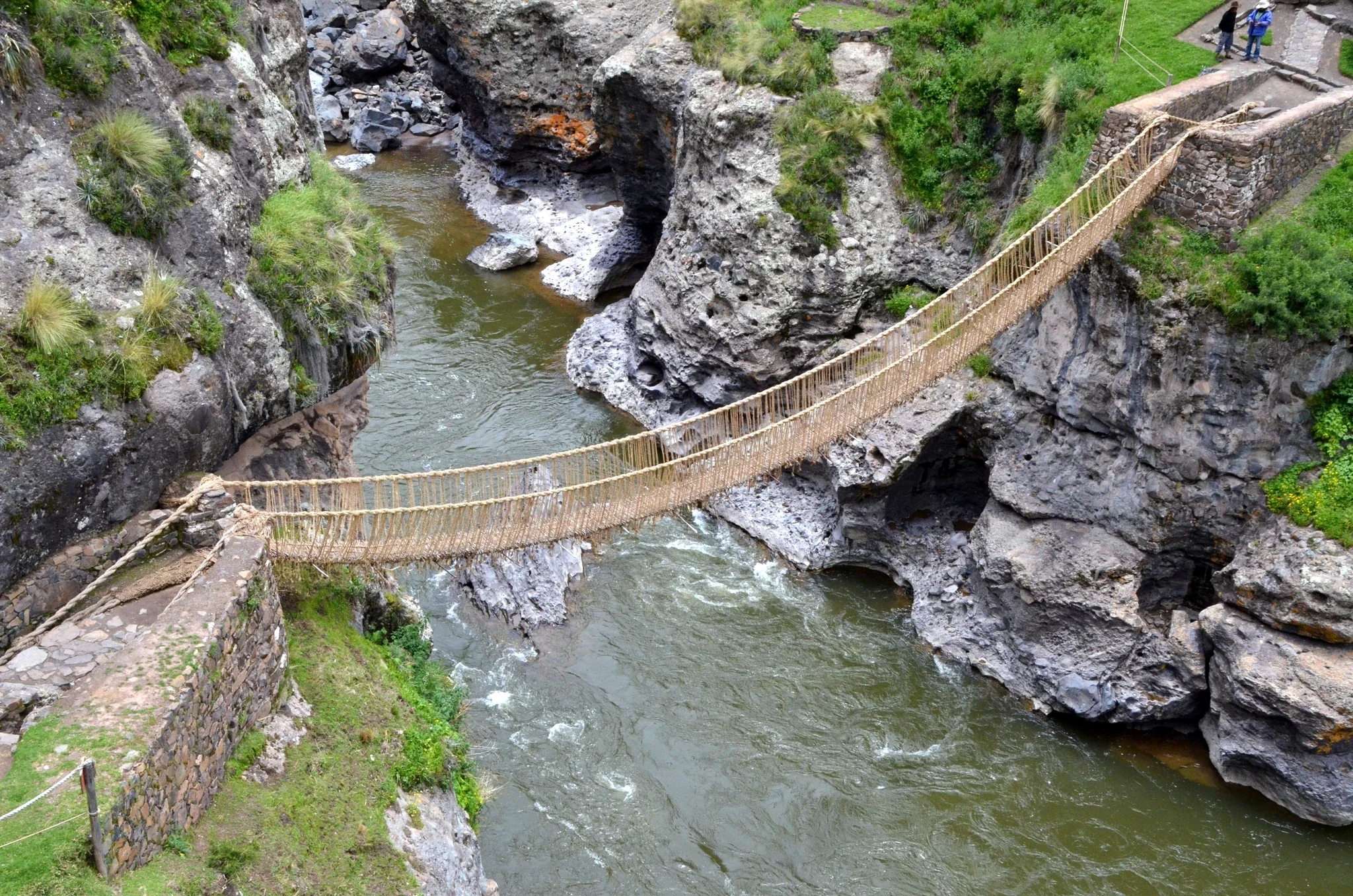
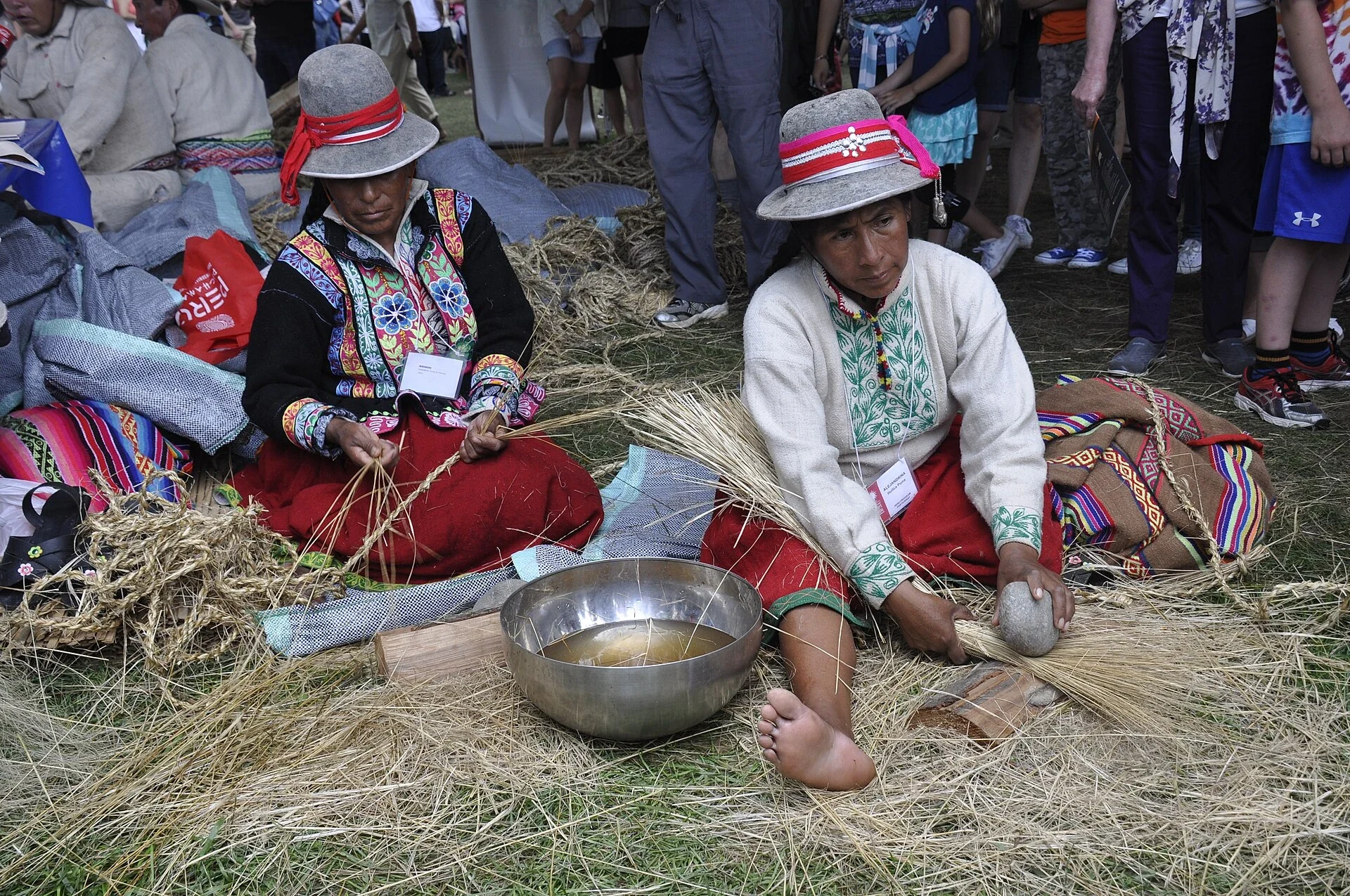
Huinchiri, Chaupibanda, Choccayhua and Ccollana Quehue renew a suspension bridge over the Apurímac River. Families twist and braid local grass into ropes, bringing engineering skills, collective work and ritual together in an annual renewal.
heritage recordUNESCO Intangible Cultural Heritage · 2013
The grass-rope Q’eswachaka bridge across the Apurímac River, Peru.
Photo: Aga Khan (IT) · CC BY-SA 4.0
Data & source notes
UNESCO heritage record ↗
The four communities, grass-rope construction, annual renewal and 2013 inscription.
Peru’s periodic report · PDF ↗
Community organization, renewal and transmission to young people.
Kallawaya knowledge
Kallawaya communities · The Andes
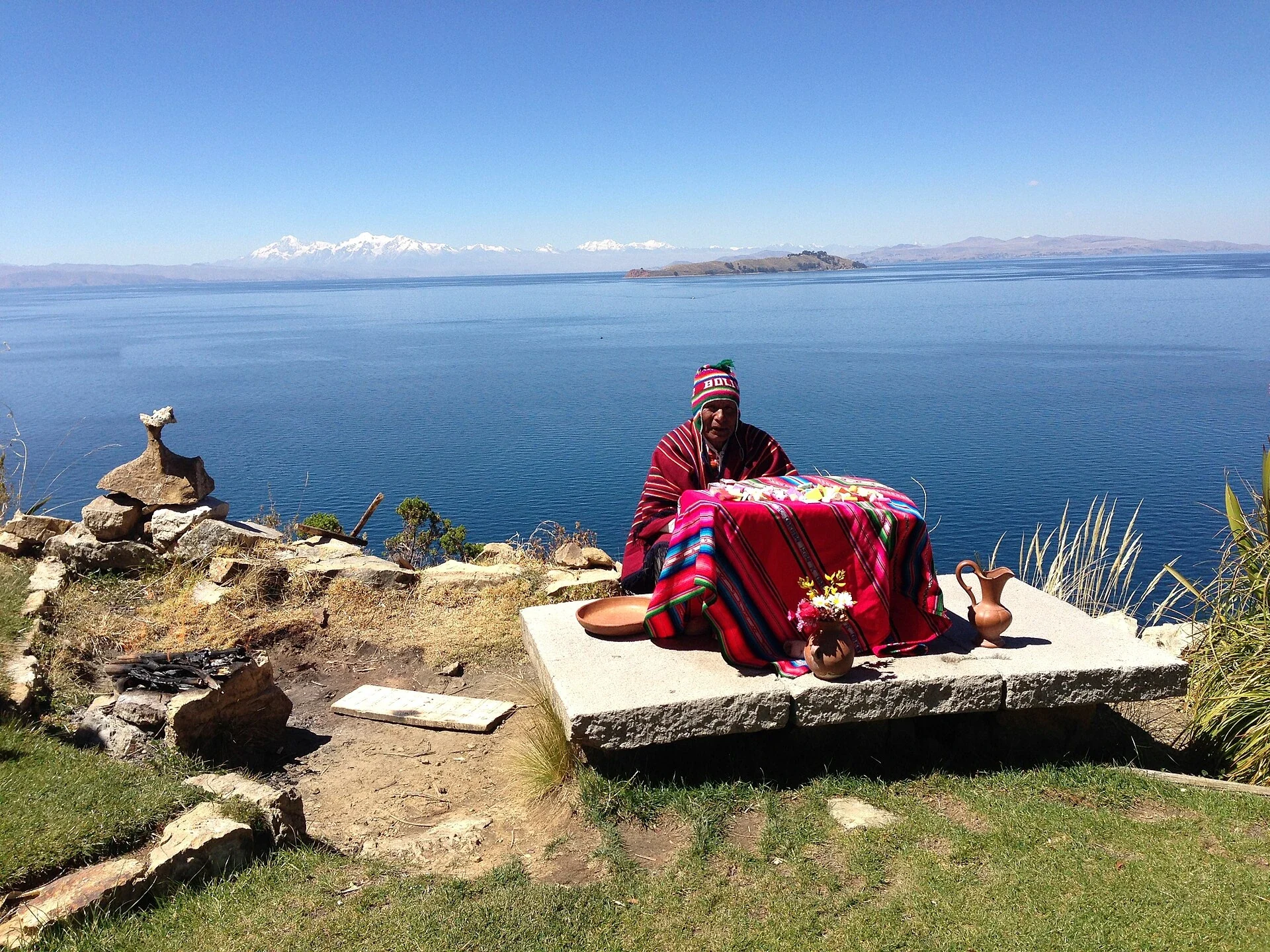
UNESCO describes Kallawaya traditions as interwoven botanical knowledge, journeys of apprenticeship, ritual, music and textile making. Travelling across different ecosystems helps transmit plant knowledge; women’s weaving also expresses the Kallawaya worldview.
heritage recordUNESCO Intangible Cultural Heritage · 2008
A Kallawaya ceremony at Yumani, Isla del Sol, Bolivia.
Photo: Montserrat Boix · CC BY-SA 4.0
Data & source notes
UNESCO heritage record ↗
Kallawaya cosmology, apprenticeship, botanical knowledge, ritual, weaving and the approximately 980-species description.
Related policy · WHO traditional medicine strategy ↗
General policy context on research, evidence, safety and culturally respectful traditional medicine.
Taquile
Taquile Island community
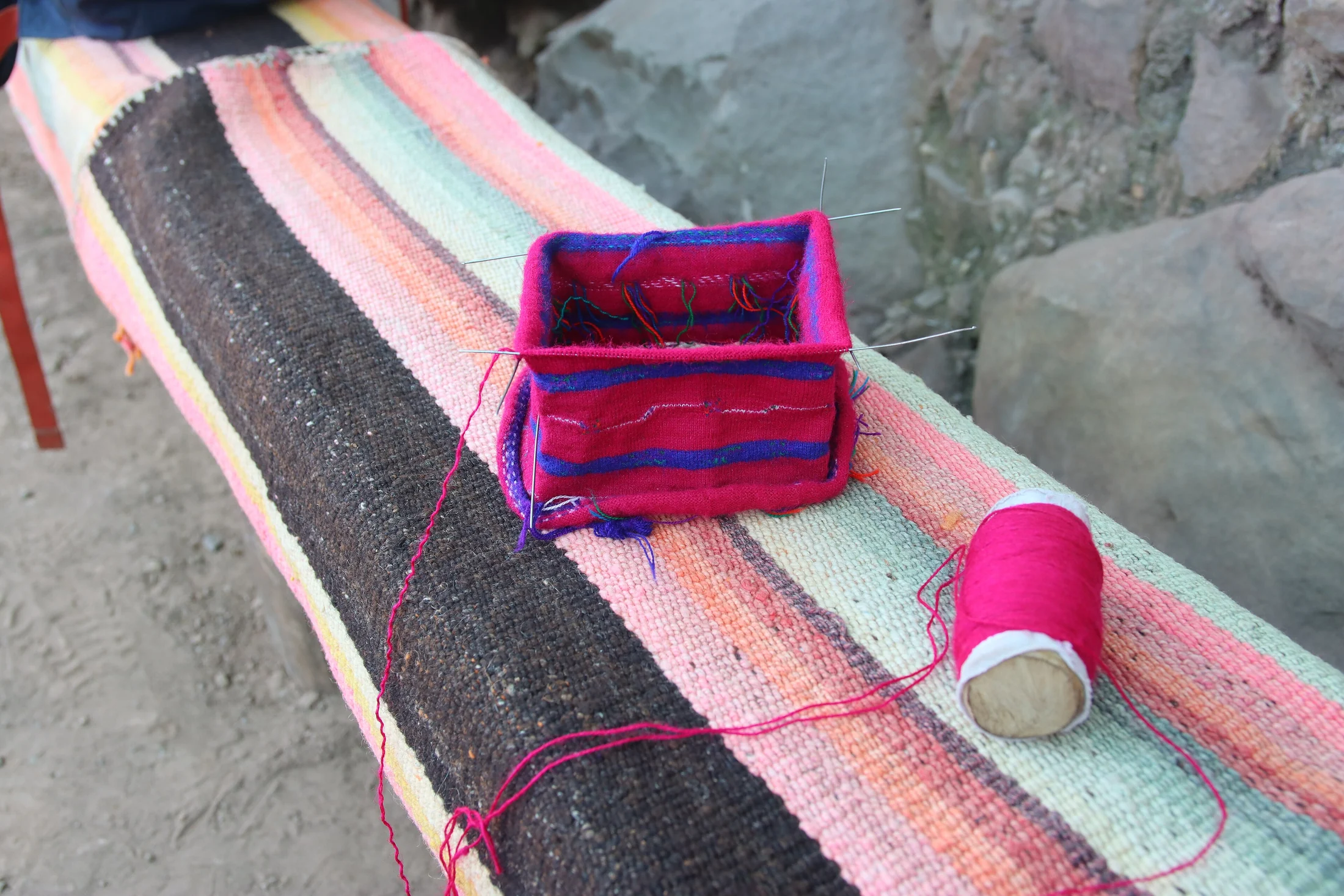
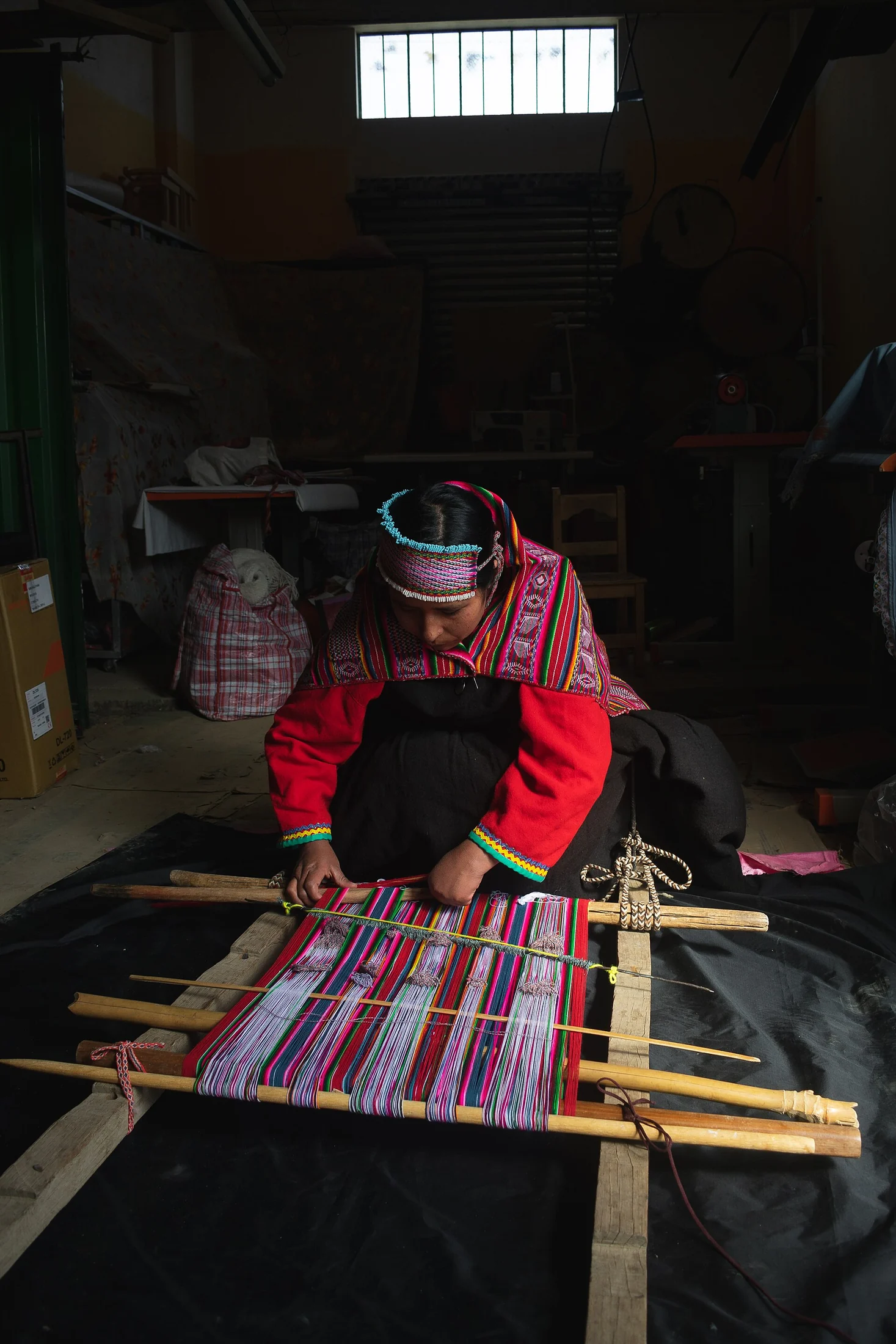
On Taquile in Lake Titicaca, textile-making belongs to everyday life. Knitting and weaving produce distinctive garments, including the chullo hat and a calendar waistband whose imagery relates to agricultural and ritual cycles.
heritage recordUNESCO Intangible Cultural Heritage · 2008
Textile objects photographed on Taquile Island, Peru, 2023.
Photo: Draceane · CC BY-SA 4.0
Data & source notes
UNESCO heritage record ↗
Garments, looms, everyday participation and 2008 inscription.
UNESCO knowledge-transmission project ↗
Transmission and continuity of textile techniques.
The Voladores
Totonac and other participating communities
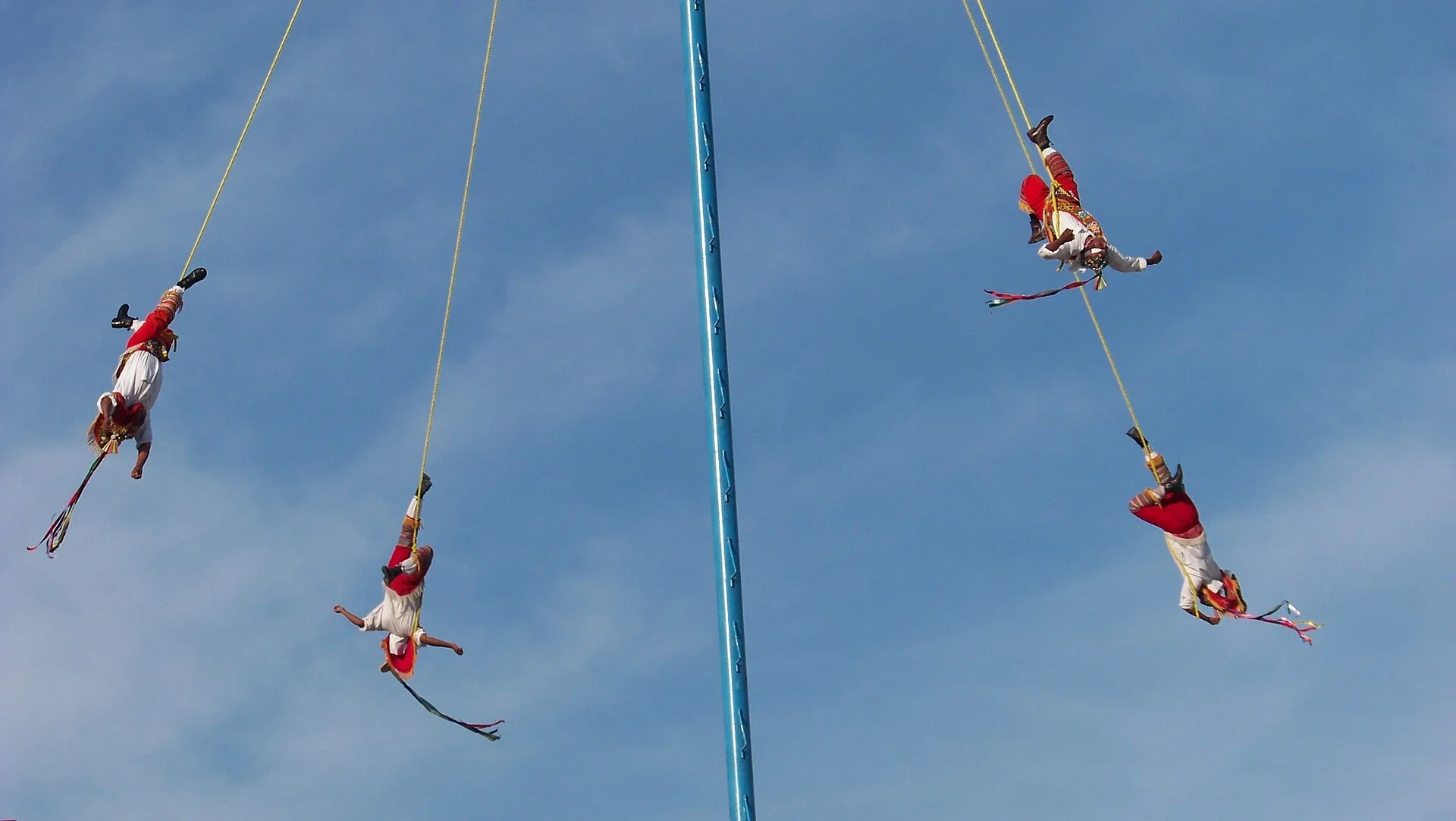
Practised by several communities, especially the Totonac, the Voladores ceremony expresses a relationship with the natural and spiritual worlds. Four flyers descend on ropes while the caporal performs on the pole with a flute and small drum.
heritage recordUNESCO Intangible Cultural Heritage · 2009
Voladores de Papantla during a rope descent.
Photo: Yaomautzin Ohtokani Olvera Lara · CC BY-SA 4.0
Data & source notes
UNESCO heritage record ↗
Totonac participation, the ceremony and the four flyers with a caporal.
UNESCO inscription decision · 2009 ↗
2009 inscription and community safeguarding.
SGang Gwaay
Haida people · Haida Gwaii
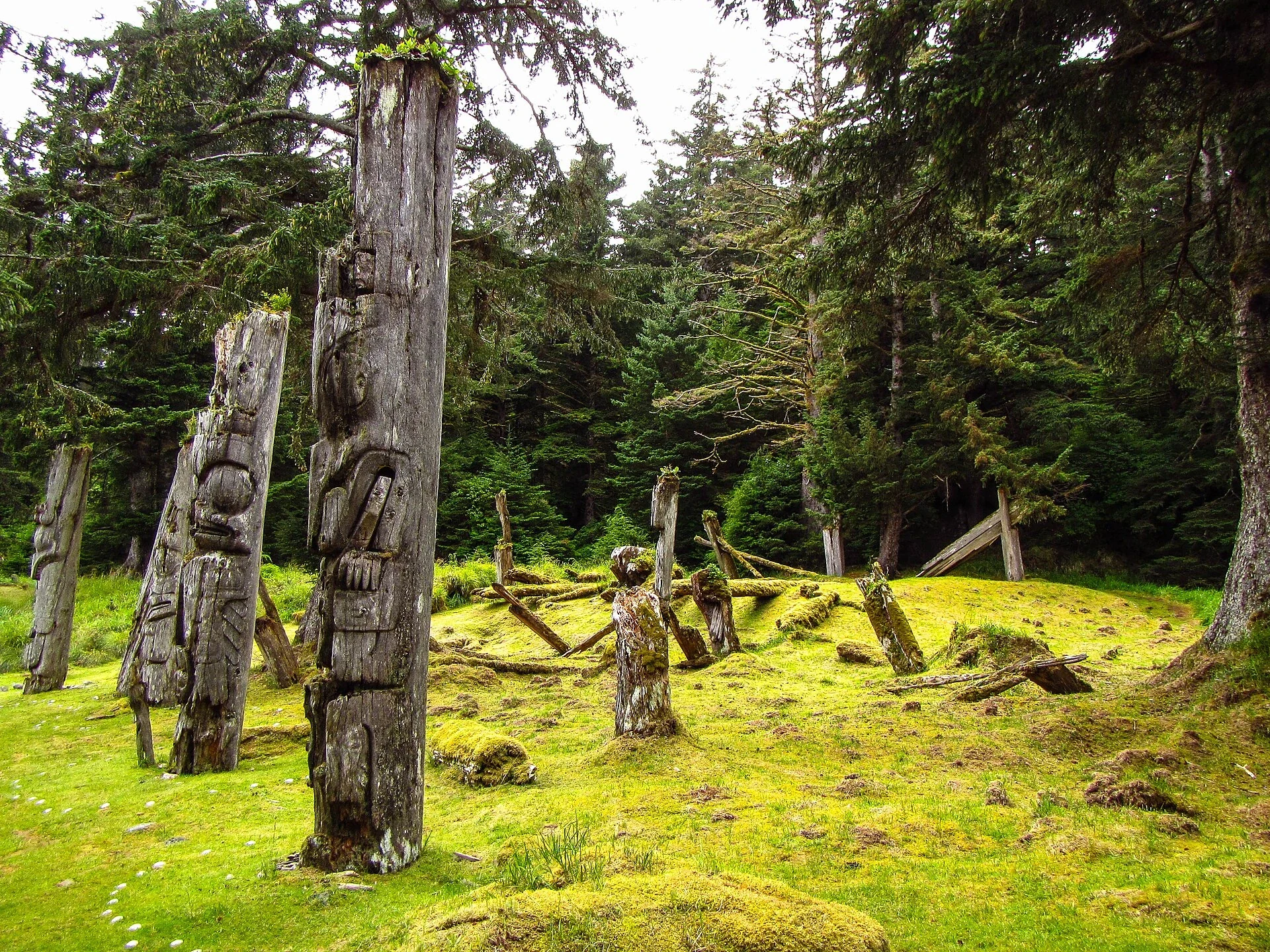
At SGang Gwaay, cedar house remains and carved mortuary and memorial poles record Haida art and village life. The site’s heritage is connected to living Haida history, beliefs and care for place.
heritage recordUNESCO World Heritage · 1981
Carved poles at SGang Gwaay Llnagaay, Haida Gwaii, Canada.
Photo: Yvrsigmatech · Public domain
Data & source notes
UNESCO property record & data ↗
Haida village life, cedar houses, mortuary and memorial poles, relationships with oral traditions and 1981 inscription.
Taos Pueblo
Taos Pueblo community
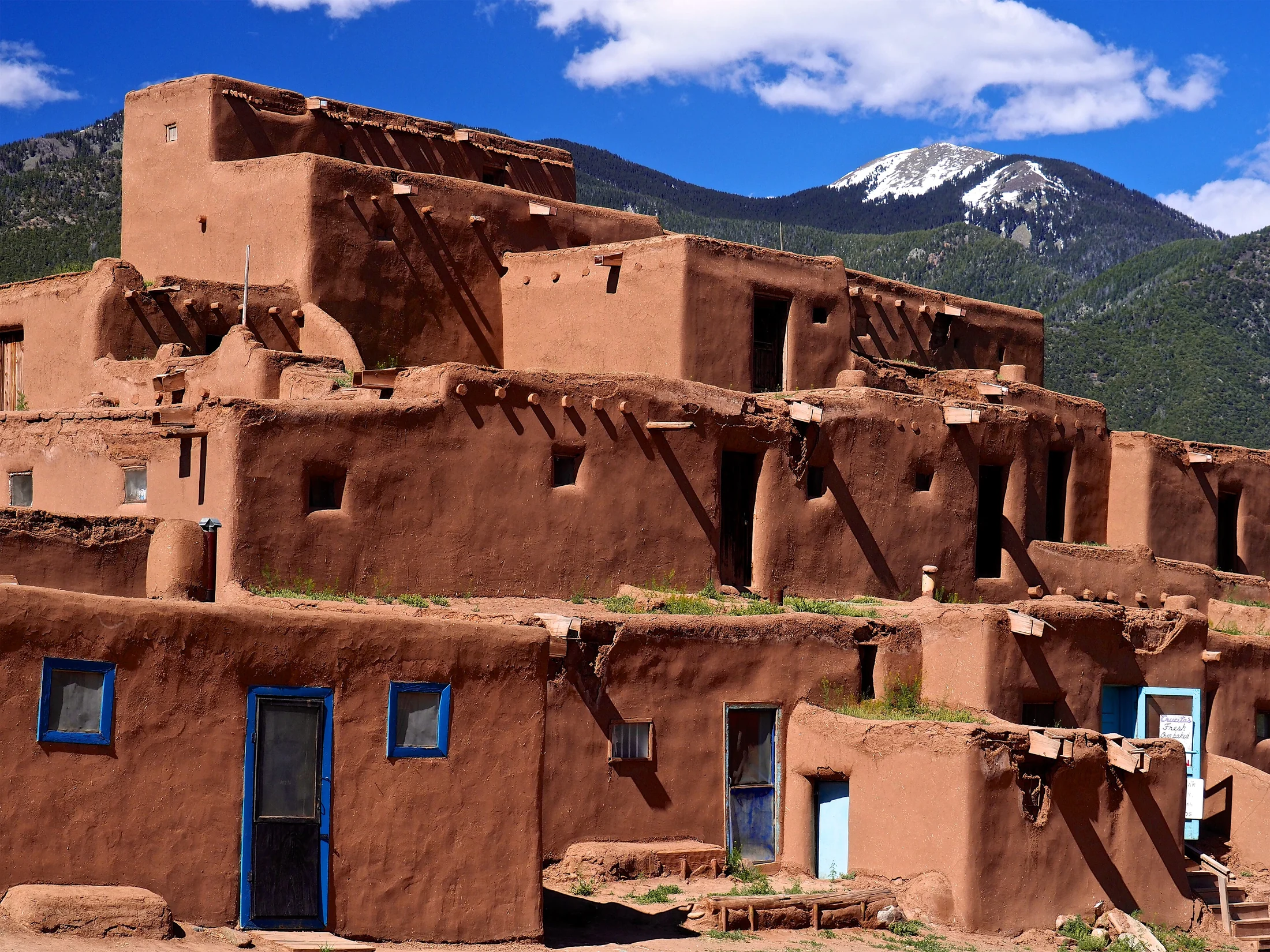
Taos Pueblo’s terraced adobe dwellings express a living Native American building tradition. Sun-dried earth bricks and regular replastering connect local materials, architecture and community care. The settlement remains governed by its own tribal institutions.
heritage recordUNESCO World Heritage · 1992
Multi-level adobe dwellings at Taos Pueblo, New Mexico, United States, 2017.
Photo: John Mackenzie Burke · CC BY-SA 4.0
Data & source notes
UNESCO World Heritage record ↗
Living community, architecture, conservation and 1992 inscription.
U.S. National Park Service ↗
Sun-dried mud bricks and continuing adobe maintenance.
Canto a tenore
Pastoral communities · Sardinia
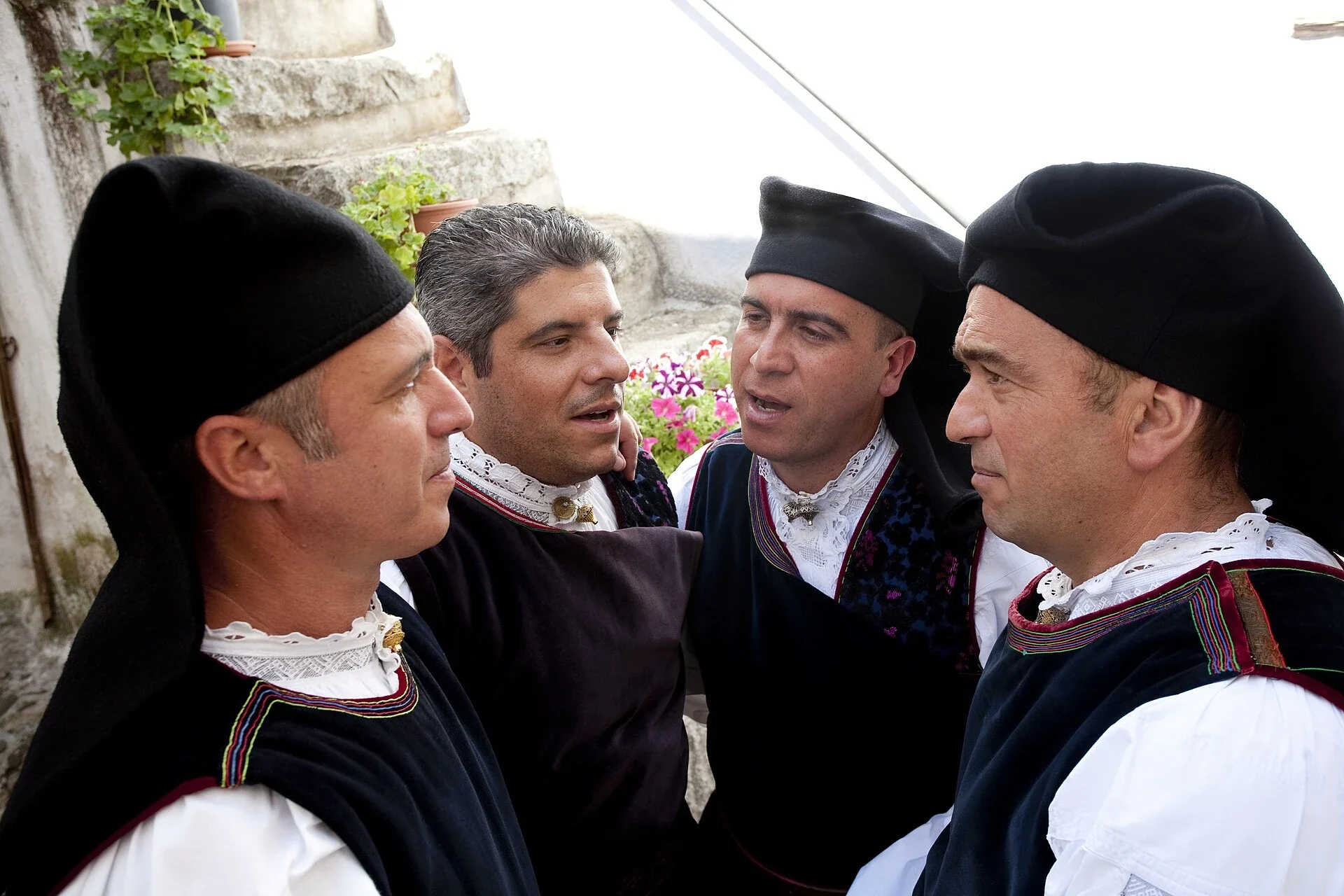
Rooted in Sardinia’s pastoral culture, canto a tenore brings four vocal parts together in a close circle. Poetry and prose meet the distinctive bassu, contra, boche and mesu boche voices in a tradition woven into community occasions and everyday life.
heritage recordUNESCO Intangible Cultural Heritage · 2008
Tenores di Bitti “Mialinu Pira”, a Sardinian vocal quartet.
Photo: Sardegnabella · CC BY-SA 3.0
Data & source notes
UNESCO heritage record ↗
Pastoral origins, four vocal parts, performance context and 2008 inscription.
UNESCO account of the singing practice ↗
The four singers’ circular arrangement and responsive performance.
Chios mastic
Mastic-growing village communities · Chios
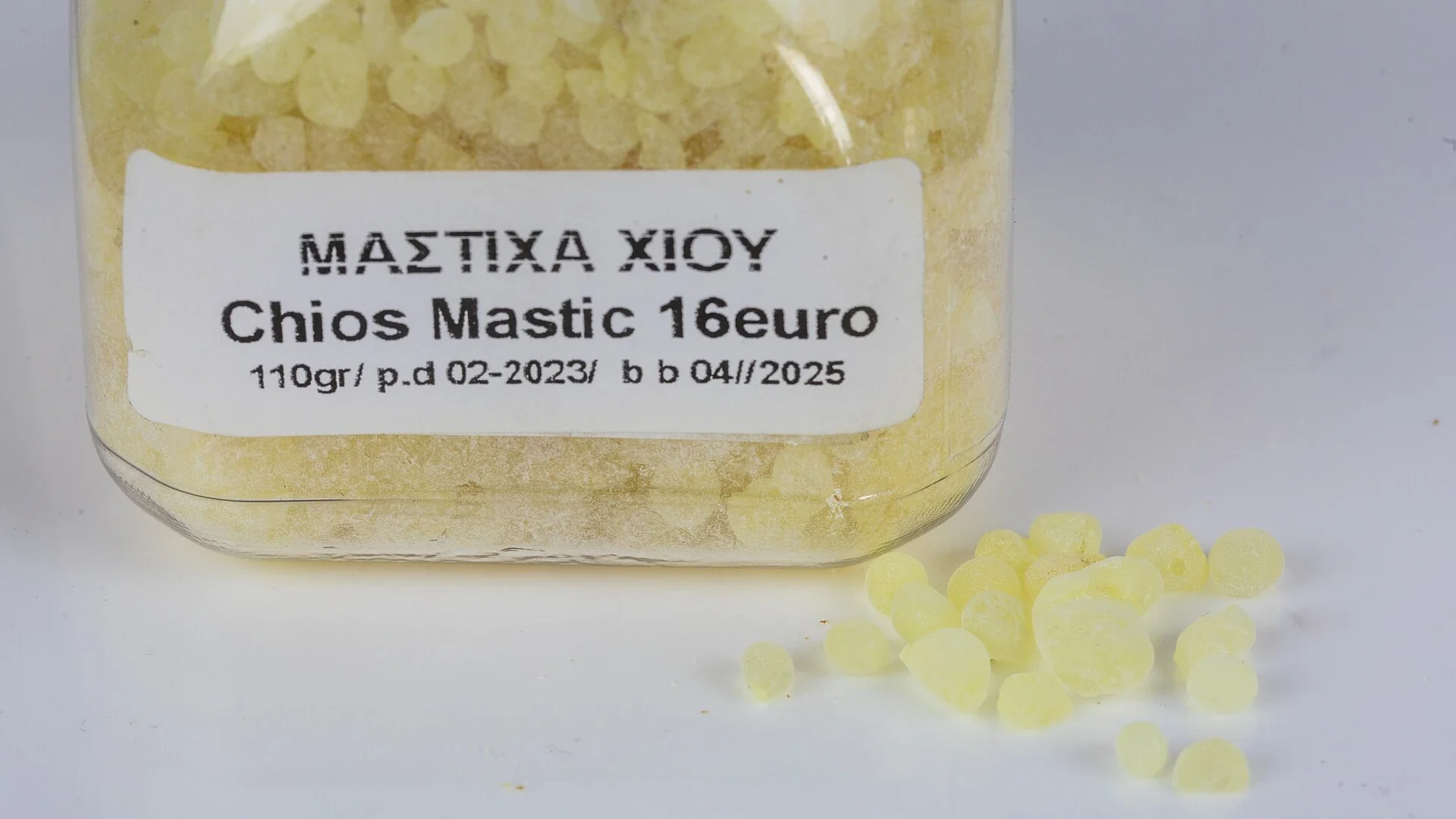
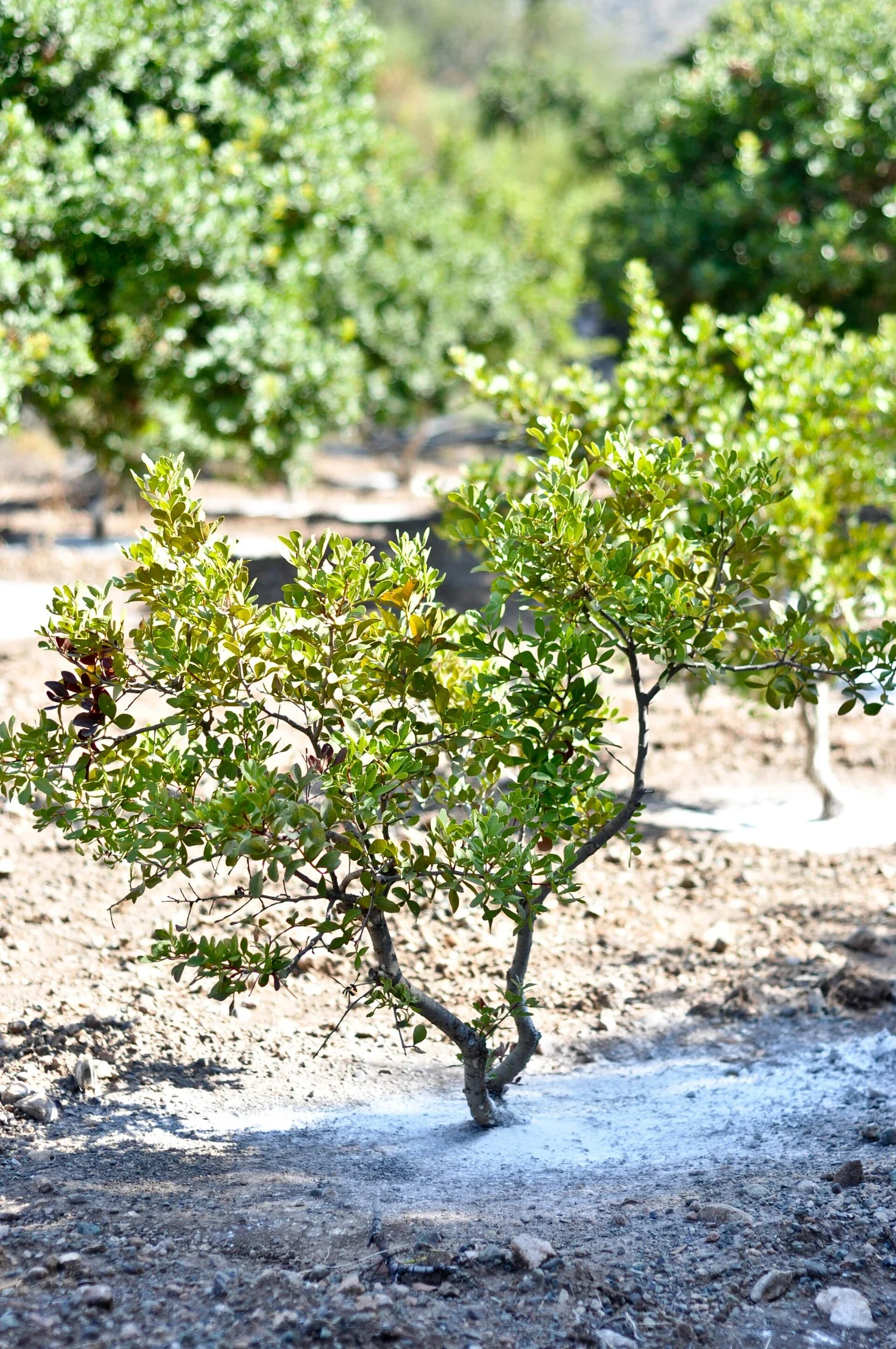
On Chios, families cultivate mastic trees and collect the aromatic resin known as mastiha. Caring for the trees, harvesting and processing the resin require knowledge passed between generations, sustaining a tradition embedded in rural social life.
heritage recordUNESCO Intangible Cultural Heritage · 2014
A jar and loose pieces of Chios mastic resin.
Photo: Raimond Spekking · CC BY-SA 4.0
Data & source notes
UNESCO heritage record ↗
Mastiha, Pistacia lentiscus, cultivation, family work and 2014 inscription.
UNESCO nomination decision · 2012 ↗
The nomination’s description of twenty-four mastic villages. The inscription followed in 2014.
Clinker boats
Nordic boatbuilding communities, including Sámi practitioners
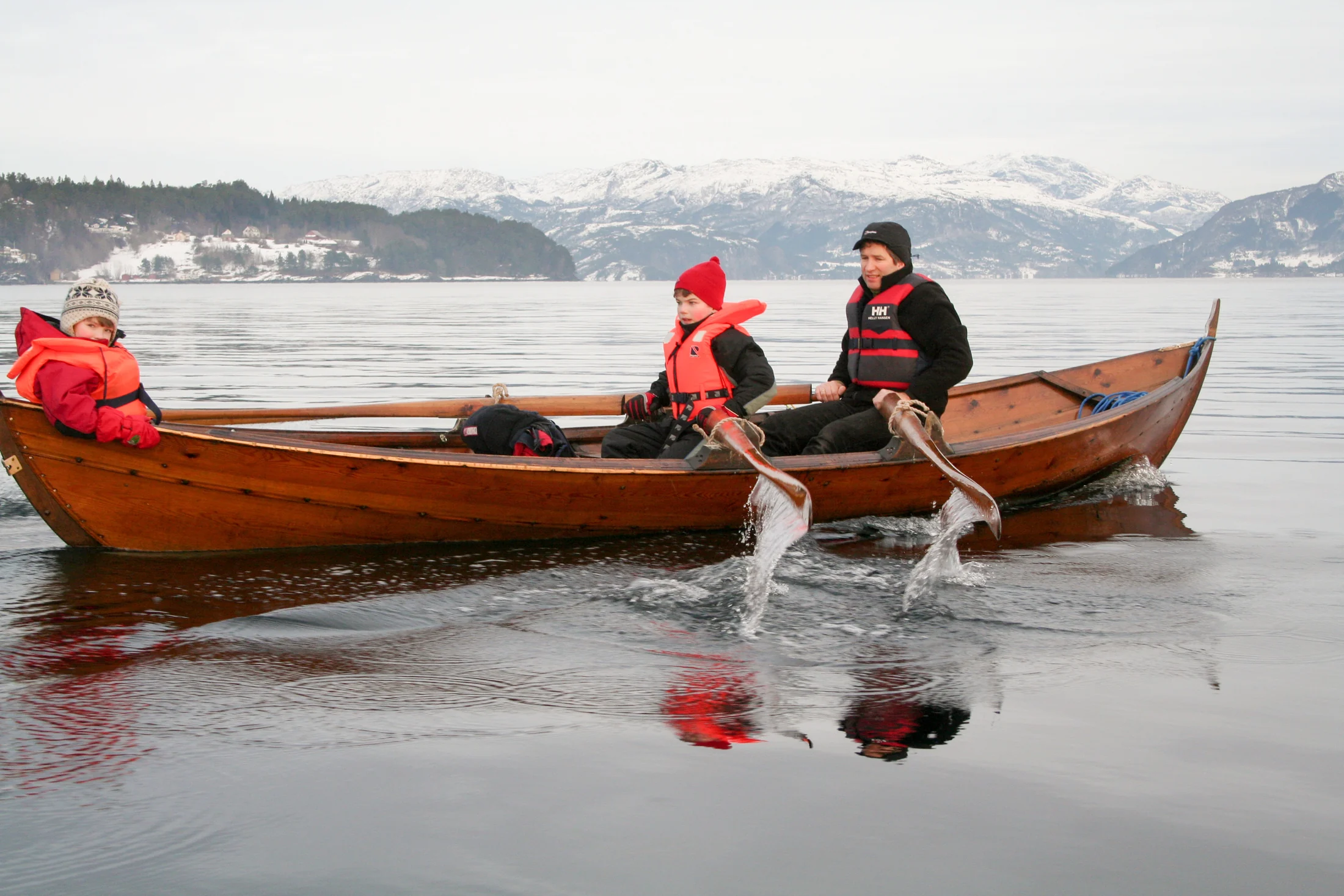
Nordic clinker boats are built with overlapping wooden planks. Boatbuilders, users and apprentices keep the craft alive through long periods of learning. The multinational tradition includes Indigenous Sámi practitioners alongside other Nordic communities.
heritage recordUNESCO Intangible Cultural Heritage · 2021
An Oselvar wooden boat near Osøyro, Norway, 2010.
Photo: Kjell Magnus Økland · CC BY-SA 4.0
Data & source notes
UNESCO heritage record ↗
Nordic communities, Sámi participation, craft transmission and 2021 inscription.
Swedish living-heritage inventory ↗
Overlapping plank construction and Nordic context.
Budj Bim
Gunditjmara people · Victoria
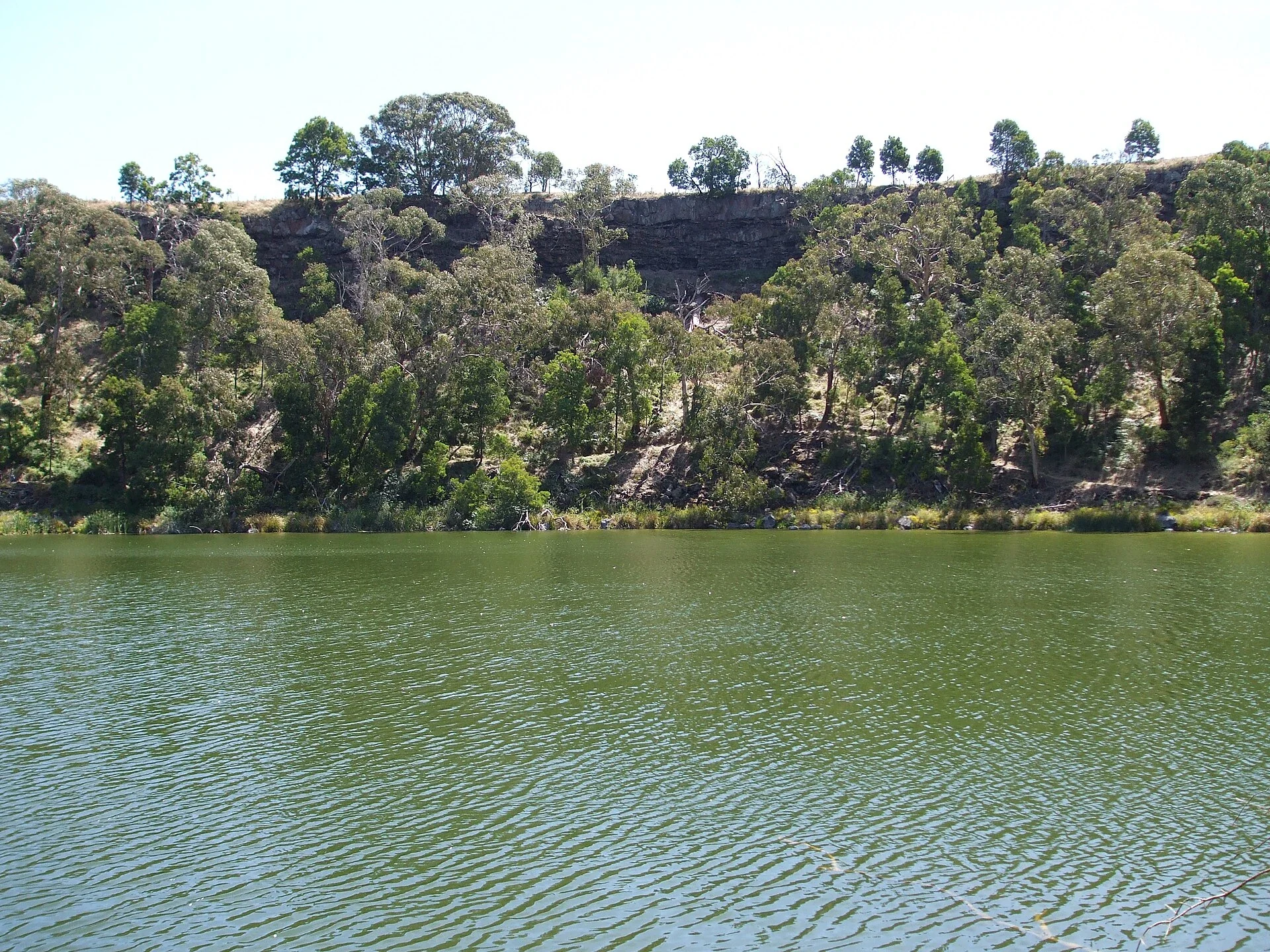
Gunditjmara people developed channels, weirs, dams and ponds to manage water and trap, store and harvest kooyang, or eel. Budj Bim’s volcanic terrain forms part of a continuing relationship between community, water, food and Country.
heritage recordUNESCO World Heritage · 2019
Lake Surprise, Budj Bim–Mt Eccles National Park, Victoria, Australia.
Photo: Dhx1 · CC0
Data & source notes
UNESCO property record & data ↗
Gunditjmara aquaculture, kooyang, three serial components and 2019 inscription.
UNESCO · Gunditjmara care for Country ↗
Contemporary Indigenous-led management and the landscape’s continuing cultural relationships. Includes aquaculture photographs.
Vanuatu sand drawing
Central and northern island communities
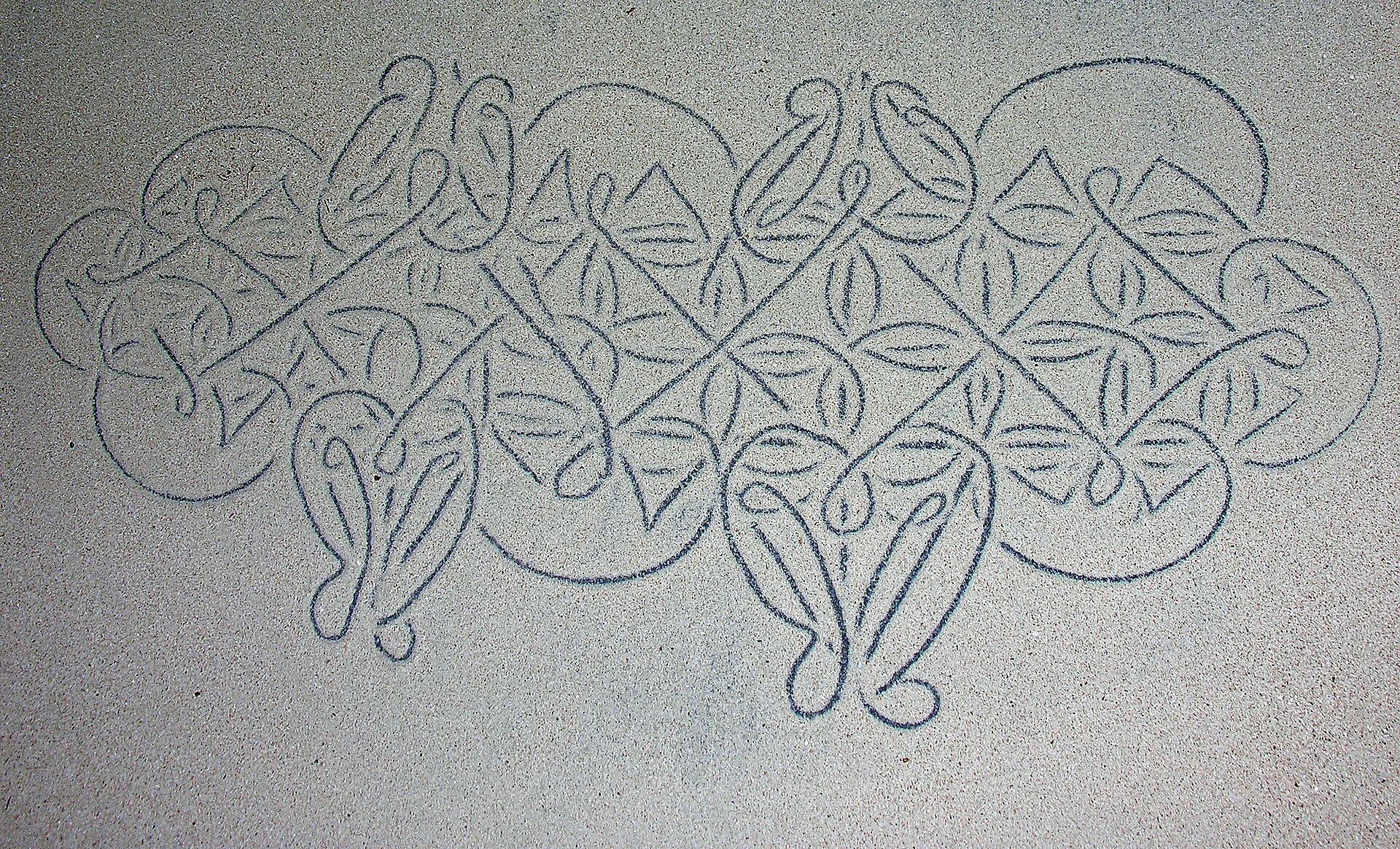
Sand drawing communicates stories and knowledge across different language communities. Using one finger, a drawer traces a continuous line in sand, volcanic ash or clay, joining geometric pattern, memory and oral explanation in a shared graphic tradition.
heritage recordUNESCO Intangible Cultural Heritage · 2008
A photographed sand drawing from Vanuatu.
Photo: PhillipC · CC BY 2.0
Data & source notes
UNESCO heritage record ↗
Continuous-line drawing, materials, oral knowledge, about 80 language groups and 2008 inscription.
UNESCO safeguarding project ↗
Knowledge transmission, ethnolinguistic communication and safeguarding work.
‘Ie Samoa
Samoan weaving communities
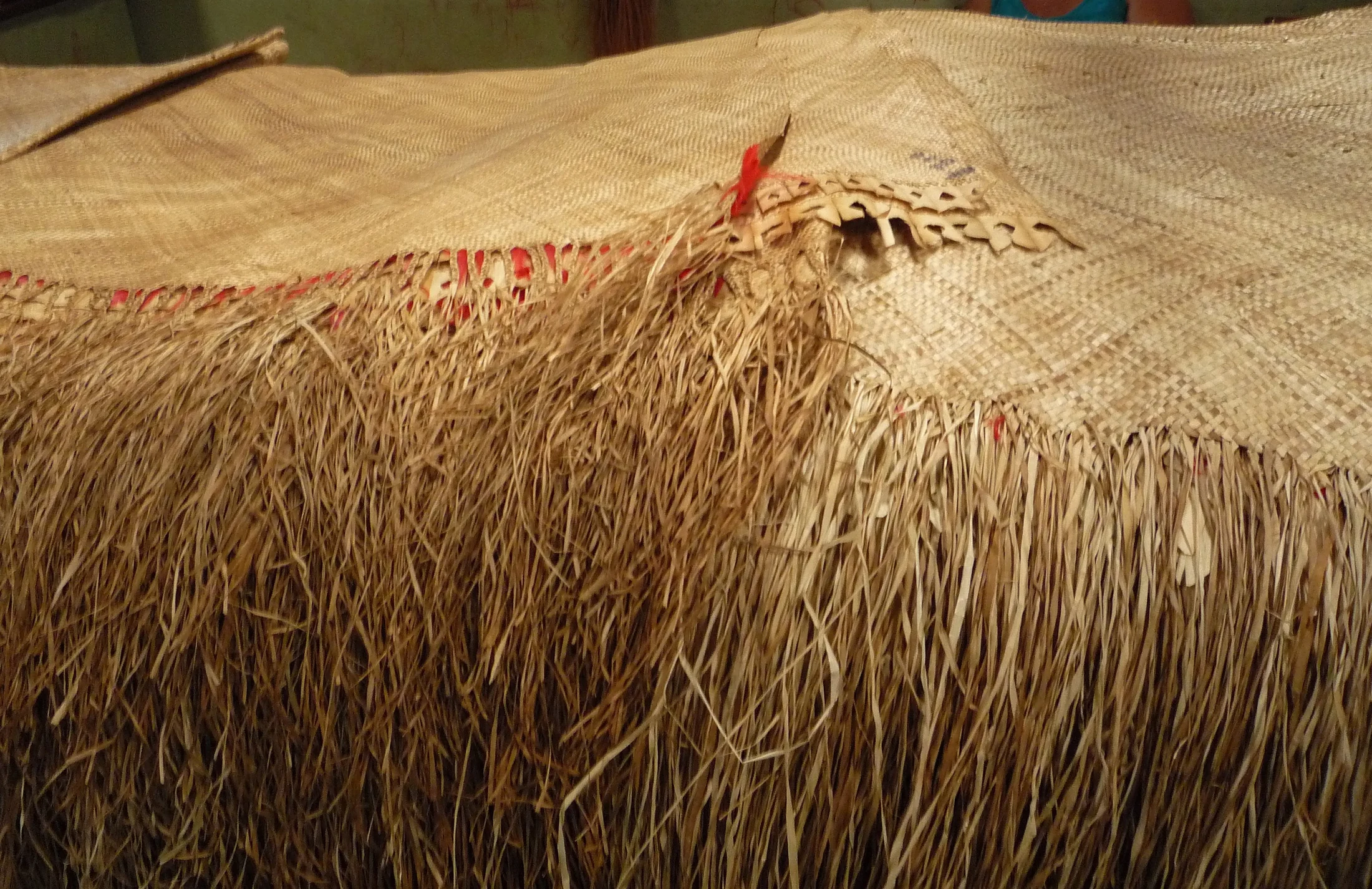
Fine pandanus strips are woven into ‘Ie Samoa, mats valued for skilled making and ceremonial exchange. Gifts at weddings, funerals and other gatherings strengthen relationships. Master weavers and village committees support learning through observation and practice.
heritage recordUNESCO Intangible Cultural Heritage · 2019
A Samoan fine mat, known as an ‘ie toga, photographed at a market in Apia, Samoa, 2009.
Photo: Sarah Kelemen · CC BY 2.0
Data & source notes
UNESCO heritage record ↗
Pandanus weaving, fine strands, ceremonial meaning and 2019 inscription.
Samoa national inventory · PDF ↗
Village learning, master weavers and ceremonial exchange.
People & practice
Knowledge is made together.
The annual renewal of Q’eswachaka brings four Quechua-speaking communities together. Families pass on rope-making and bridge-weaving skills through shared work.
read the heritage recordPeople & practice
Skill belongs to everyday life.
On Taquile, men and women participate in textile-making. Knitted hats and woven garments link practical skill with the island community’s cultural identity.
read the heritage recordPeople & practice
Heritage takes many forms.
The Kallawaya heritage record brings together botanical knowledge, ritual practices, music and textile traditions. Its craft and knowledge are carried through learning within the community.
read the heritage recordPhoto: Jarek Tuszyński · CC BY 4.0
Photo: Noemi Gonzales C. · CC BY-SA 4.0
Landscapes shaped by knowledge.
In the Philippine Cordilleras, Ifugao communities maintain rice terraces through irrigation, forest-water knowledge and shared work. The landscape brings food production, water management and cultural life together.
Five terrace clusters form the UNESCO World Heritage property. Their care shows the connection between a place, its material systems and the knowledge of its people.
UNESCO World Heritage · five clusters · inscribed 1995
UNESCO: traditional knowledge and climate resilience
Photo: CEphoto, Uwe Aranas · CC BY-SA 4.0
Engineering with living materials.
In Meghalaya, Khasi communities guide and intertwine aerial roots of Ficus trees to form living bridges. The structures connect plant growth, observation and skilled work over time.
India’s UNESCO Tentative List submission describes living-root-bridge traditions in more than 75 villages. This record documents a proposed heritage landscape.
UNESCO Tentative List submission · 2022 · not an inscribed World Heritage property
Read India’s submission and village data
Photo: Chaduvari · CC BY-SA 4.0
A drawing can carry a world.
In Vanuatu, continuous finger-drawn patterns in sand, ash or clay communicate stories and knowledge. The tradition operates among about 80 language groups in the central and northern islands.
The International Decade of Indigenous Languages, 2022–2032, supports language preservation and revitalization. Knowledge transmission and cultural expression remain central to that work.
UNESCO living-heritage record · inscribed 2008
UNESCO: International Decade of Indigenous Languages
Photo: PhillipC · CC BY 2.0
From the heritage records
Wood as structure, memory and craft.
Zafimaniry knowledge connects the selection of local wood with houses, furniture and carved objects. UNESCO’s record describes a tradition sustained through practical skill across generations.
read the recordPhoto: krishna naudin · CC BY-SA 2.0
Documentary focus · Peru
A bridge renewed.
A bond reaffirmed.
Q’eswachaka brings together grass-rope engineering, ritual and collective work.
Watch the UNESCO documentaryOpens on UNESCO’s video page ↗
Photo: Aga Khan (IT) · CC BY-SA 4.0
View source notes
The heritage record describes an annual renewal by the Quechua-speaking communities of Huinchiri, Chaupibanda, Choccayhua and Ccollana Quehue. Families twist plant fibres into ropes; craftspeople weave the structure between stone anchorages.
- UNESCO inscription: 2013.
- Four participating communities; the bridge is renewed each year.
- The linked UNESCO film is credited to Peru’s Ministry of Culture, 2010. The still photograph above is a separately credited Commons image.
Living through generations
Skills are shared.
Cultures keep evolving.
Living heritage is sustained through practice, teaching and adaptation. The craft of a weaver, a builder’s material knowledge and the work of a community carry culture into everyday life.
Photographs change between documented practices.
Individual creators, licences and source records →
Materials with meaning
Objects reveal the connection between a local resource, a skilled process and the culture that gives it purpose.
QUECHUA COMMUNITIES · PERU
Grass to rope
Plant fibres are twisted and braided into the ropes used to renew Q’eswachaka.
Practice and material source ↗MASTIC VILLAGES · CHIOS, GREECE
Resin to heritage
Cultivation and processing of mastic resin connect tree knowledge with a shared craft tradition.
Practice and material source ↗TAOS PUEBLO · UNITED STATES
Earth to home
Sun-dried earth bricks and adobe plaster form dwellings cared for by the community.
Practice and material source ↗BATIK COMMUNITIES · INDONESIA
Wax to pattern
Wax protects selected areas of cloth during dyeing, allowing motifs and colours to emerge.
Practice and material source ↗NORDIC MARITIME COMMUNITIES
Timber to boat
Overlapping wooden planks form the hulls of traditional clinker-built boats.
Practice and material source ↗SAMOAN WEAVING COMMUNITIES
Pandanus to gift
Fine leaf strips become mats whose ceremonial exchange reaffirms relationships.
Practice and material source ↗One world. Many traditions.
Explore 18 documented examples across six continents. The collection includes Indigenous Peoples and other traditional communities; each record identifies its own people, place and heritage status.